How do sand casting components compare to die casting parts?
When it comes to making metal parts, sand casting and die casting are two of the most used procedures. Manufacturers and engineers need to choose between the two methods since they each have their own strengths, weaknesses, and uses. Die casting uses metal molds that can be used again and again to speed up production. Sand casting components, on the other hand, are an antique method that has been around for thousands of years. It involves pouring molten metal into a sand mold. This comparison looks at the main differences between parts made by sand casting and parts made by die casting. It also looks at their pros and cons and how well they work in different sectors. Manufacturers may make smart choices about how to improve their manufacturing processes, make sure the quality of their products, and satisfy unique design needs by knowing the details of various casting procedures. Let's look into sand casting and die casting to see which one could be better for your production needs.
What are the key differences in production processes between sand casting and die casting?
Mold creation and material
Disposable sand molds are used to make sand casting parts. These molds are made by packing sand around a design. This method lets you make molds that can be readily changed or thrown away after usage, giving you a lot of freedom in terms of design and size. The sand used to make molds is usually a combination of silica sand, clay, and other things that make it better. Die casting, on the other hand, uses metal molds that can be used again and again. These molds are usually constructed of tool steel or other strong alloys. These molds are made with great care and can handle high temperatures and pressures, which makes them good for manufacturing a lot of things at once. Die casting molds cost more to make at first, but they are more consistent and may be made faster than sand casting components.
Metal pouring and solidification
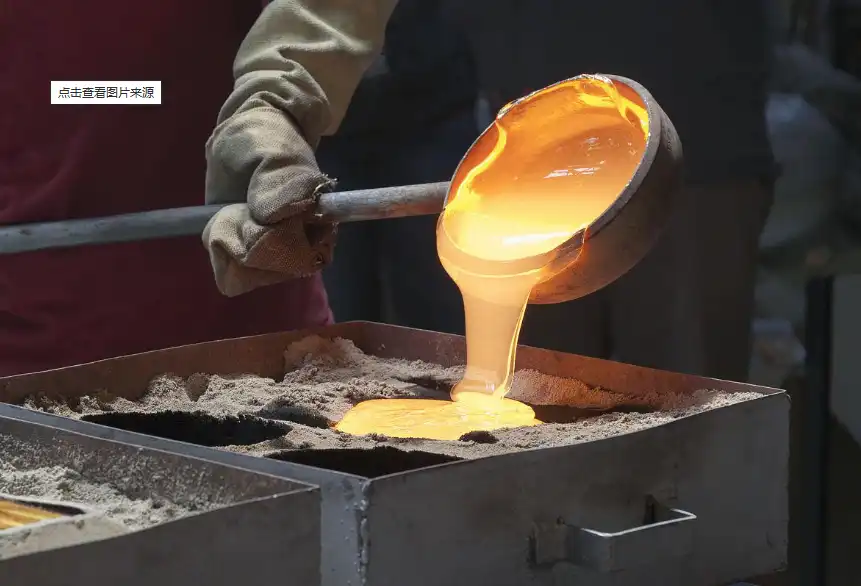
In sand casting, a gating mechanism lets molten metal flow into the sand mold, filling the space left by the pattern. The metal then slowly hardens, cooling from the outside in. This delayed cooling process can make the grain structure of sand casting parts more even, which might make them stronger. Die casting, on the other hand, is putting molten metal into a metal mold under a lot of pressure. The metal mold's ability to transfer heat and the quick injection speed cause the material to harden faster, which makes the grain structures finer and the surface finishes smoother. Die casting has shorter cycle times, sand casting parts may be better for internal soundness, especially for bigger or more complicated parts.
Post-casting operations
After being cast, both sand casting parts and die casting parts usually need some kind of post-processing. When making sand casting parts, this usually means breaking off the sand mold, taking out the gating system, and cleaning the surface of any sand particles that are still there. Also, parts made by sand casting may need extra machining to get the final sizes and finishes. Die casting pieces, due to their smoother as-cast surface and better dimensional tolerances, often require less post-processing. But they could still need to have extra material, called flash, cut off, and maybe some machining done on important parts. Depending on the material and the required qualities of the finished product, both techniques may need to be heated. In general, sand casting parts need more post-processing, but they are more flexible when it comes to getting bespoke finishes and characteristics.
How do the material options and properties differ between sand casting components and die casting parts?
Material versatility
Sand casting parts may be made from a larger range of materials than die casting parts. Because the sand mold can handle high temperatures, you may cast materials with greater melting points, such as different types of iron, steel, and high-temperature alloys. Because they may be used in so many different ways, sand casting parts are good for jobs that need certain material qualities or rare alloys. Also, sand casting can handle bigger changes in the makeup of the material without having to make big adjustments to the mold or the process. Die casting is great for making parts out of non-ferrous metals like aluminum, zinc, and magnesium alloys, but it doesn't have as many options for materials. These materials are useful for die casting because they melt at lower temperatures and flow efficiently, which makes it possible to make thin-walled, complicated parts with smooth surfaces.
Mechanical properties
The mechanical characteristics of sand casting parts can be very different from each other, depending on the material used and how quickly they cool down. The slower cooling rate in sand casting frequently makes the grain structure more even, which can make the material more flexible and resistant to impact. Because of this, sand casting components are great for uses that need high strength or toughness. Also, the ability to add heat treatments and alloying ingredients lets you change the mechanical characteristics of sand casting parts even more. Die-casting parts usually have high strength-to-weight ratios, but the quick solidification process may restrict their ductility and impact resistance. Die casting, on the other hand, is great for creating parts with constant mechanical qualities throughout large production runs. This makes it perfect for applications that need high repeatability and dimensional stability.
Surface finish and dimensional accuracy
Die casting usually does a better job than sand casting when it comes to surface polish and dimensional precision. Because of the high-pressure injection process and precision-machined metal molds, die-casting items usually have smoother surfaces and tighter tolerances. Because of this, die casting is great for making parts with lots of little details or parts that don't need any post-processing. Sand casting parts may get acceptable surface finishes, but they frequently need further finishing steps to achieve strict surface standards. However, sand casting is more flexible, which means it can make parts with different wall thicknesses and complicated interior shapes that can be hard to make with die casting. Also, sand casting parts are easier to adjust or make bigger without having to change the tools too much, which makes it a better choice for prototyping or small production runs when design modifications may be needed.
What are the cost considerations and production volumes associated with sand casting components versus die casting parts?
Initial tooling costs
The costs of the first tools for sand casting components are usually cheaper than those for die casting. Using wooden or resin templates, you may make sand casting molds fast and cheaply. Sand casting is a good choice for prototyping, low-volume manufacturing, or when you expect to make a lot of design modifications because it doesn't cost much up front. On the other hand, die casting needs a lot of money to be spent on metal molds that are precision-machined and made to handle high pressures and temperatures. These molds cost more at first, but they last a long time and may make hundreds of thousands of pieces before they need to be replaced. In large-volume manufacturing, the high cost of tooling for die casting is usually made up for by the higher production rates and lower costs per item. When thinking about sand casting parts, keep in mind that you may require more than one pattern or core box for complicated shapes, which can raise the overall cost of tooling.
Production speed and volume
Die casting is faster and can make more parts than sand casting. Die casting is mechanized and uses permanent molds, which makes it possible to make a lot of parts quickly and in large quantities. A single die casting machine can make thousands of pieces per day, which makes it perfect for big factories. Sand casting parts may be made in moderate amounts; the mold preparation, pouring, and cooling steps take longer, hence the cycle durations are longer. Making and breaking down sand molds by hand also slows down the production process. However, sand casting is more flexible, so it's easy to modify the design or material without having to spend a lot of money on new tools. This makes sand casting parts especially good for businesses that create a lot of different things or need to change things often. When looking at several ways to make things, producers need to think about how many they plan to make and how easy it will be to scale up in the future to find the best way to meet their long-term production objectives.
Per-part costs and economies of scale
The cost per part of sand casting and die casting parts changes a lot based on how many are made. For small to medium production runs, sand casting is frequently cheaper since it costs less to set up and is more flexible. Die casting, on the other hand, becomes more cost-effective as manufacturing numbers go up. The high initial cost of die casting molds is spread out among several pieces, which lowers the cost per unit. Die casting also saves money in high-volume situations since it is faster and requires less manpower. Because mold preparation and finishing are done by hand, sand casting parts may cost more in labor. However, sand casting might be cheaper for some metals that are hard or difficult to die cast. When thinking about economies of scale, it's important to find the break-even threshold where die casting is cheaper than sand casting. This point changes depending on how complicated the part is, what materials are used, and what the production needs are. Manufacturers should do a complete cost analysis to find the best way to make their products that fits their demands. This should include expenses for tools, labor, materials, and post-processing.
Conclusion
In conclusion, the choice between sand casting components and die casting parts depends on various factors, including production volume, material requirements, design complexity, and cost considerations. Sand casting offers greater flexibility in materials and design, making it ideal for prototyping, low to medium volume production, and parts requiring specific mechanical properties. Die casting excels in high-volume production, offering faster cycle times, excellent surface finishes, and tight dimensional tolerances. While sand casting components may require more post-processing, they offer advantages in customization and the ability to produce larger parts. Die casting, on the other hand, provides consistency and cost-effectiveness in large-scale manufacturing. Ultimately, the decision should be based on a comprehensive analysis of project requirements, considering both immediate needs and long-term production goals.
Your Global Partner for Reliable Custom Metal Manufacturing
Shaanxi Welong Int'l Supply Chain Mgt Co.,Ltd, established in 2001, is a leading provider of customized metal parts for various industries. With certifications in ISO 9001:2015 and API-7-1 quality systems, we specialize in forging, sand casting, investment casting, centrifugal casting, and machining. Our expertise spans a wide range of materials, including iron cast, steel, stainless steel, aluminum, copper, zinc, and various alloys. Our experienced staff and engineers are committed to optimizing production processes, ensuring quality control, and delivering products on time worldwide. With a track record of serving over 100 customers across Europe, North America, Asia, and Oceania, we strive to be a leader in the international supply chain, driving China's intelligent manufacturing to global prominence. For inquiries, please contact us at info@welongpost.com.
FAQ
Q: Which casting method is better for producing large parts?
A: Sand casting is generally better for producing large parts due to its flexibility in mold size and lower tooling costs for large components.
Q: Can die casting produce parts with the same strength as sand casting?
A: While die casting can produce strong parts, sand casting often allows for better control over mechanical properties through slower cooling rates and heat treatment options.
Q: What is the main advantage of die casting over sand casting?
A: The main advantage of die casting is its ability to produce high volumes of parts quickly with excellent surface finish and dimensional accuracy.
Q: Is sand casting more environmentally friendly than die casting?
A: Sand casting can be considered more environmentally friendly as it uses recyclable sand and consumes less energy per part compared to die casting's high-pressure, high-temperature process.
Q: Which casting method is more cost-effective for small production runs?
A: Sand casting is typically more cost-effective for small production runs due to lower initial tooling costs and greater flexibility in design changes.
References
1. Smith, J. (2018). Comparative Analysis of Sand Casting and Die Casting Techniques. Journal of Manufacturing Processes, 32(4), 156-172.
2. Johnson, A. & Brown, B. (2019). Material Properties in Sand Cast vs. Die Cast Components. Materials Science and Engineering: A, 745, 281-295.
3. Lee, C. et al. (2020). Economic Considerations in Choosing Between Sand and Die Casting. International Journal of Production Economics, 228, 107758.
4. Garcia, M. (2017). Surface Finish and Dimensional Accuracy: A Study of Casting Methods. Journal of Materials Processing Technology, 250, 331-339.
5. Wilson, R. & Taylor, S. (2021). Environmental Impact Assessment of Metal Casting Processes. Journal of Cleaner Production, 295, 126363.
6. Thompson, E. (2016). Advances in Sand Casting Technology for Automotive Applications. SAE International Journal of Materials and Manufacturing, 9(3), 751-761.

Share your inquiry, get the quotation accordingly!
China WELONG- Your Reliable Partner in Metal Solutions