Forged vs Cast Iron: Understanding Strength and Durability
When evaluating metal components for industrial applications, understanding the fundamental differences between forged and cast iron becomes crucial for procurement decisions. Forged iron parts demonstrate superior strength and durability through their refined grain structure, achieved by mechanically shaping heated metal under extreme pressure. This process creates components with enhanced tensile strength, impact resistance, and fatigue life compared to cast alternatives. Cast iron, while offering design flexibility and cost advantages for complex geometries, relies on molten metal poured into molds, resulting in different mechanical properties and performance characteristics suitable for specific applications.
Manufacturing Process Differences: How Production Affects Performance?
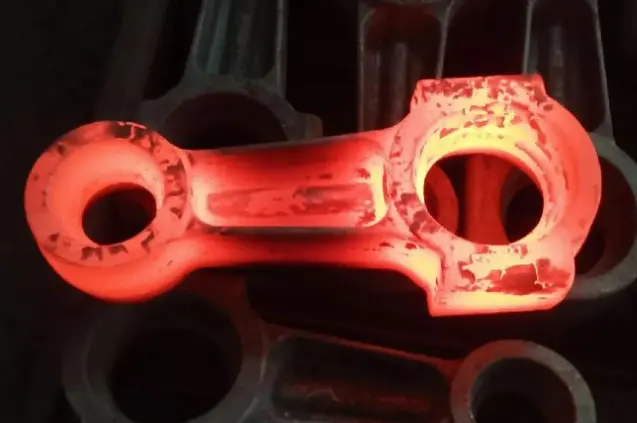
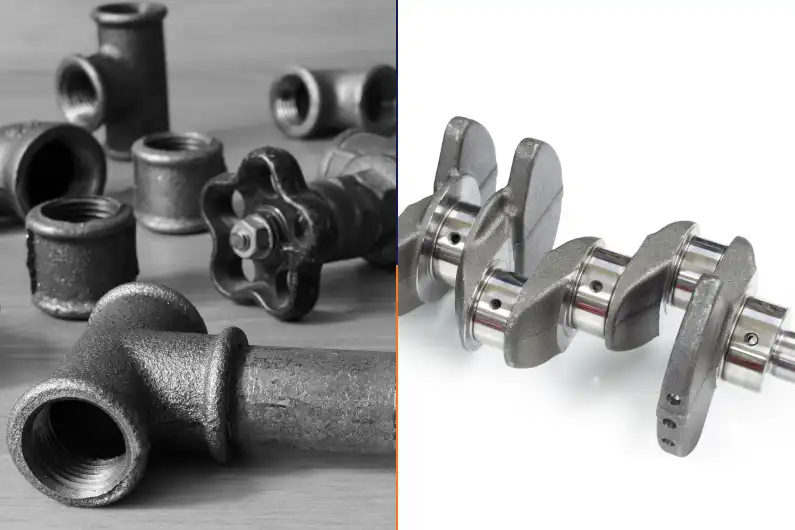
The manufacturing approach fundamentally determines the final properties of metal components. Forging involves heating iron to approximately 1,200°C and applying controlled pressure through hammers, presses, or dies. This hot forged iron parts production method refines the grain structure, eliminates internal voids, and aligns metal fibers along the part geometry.
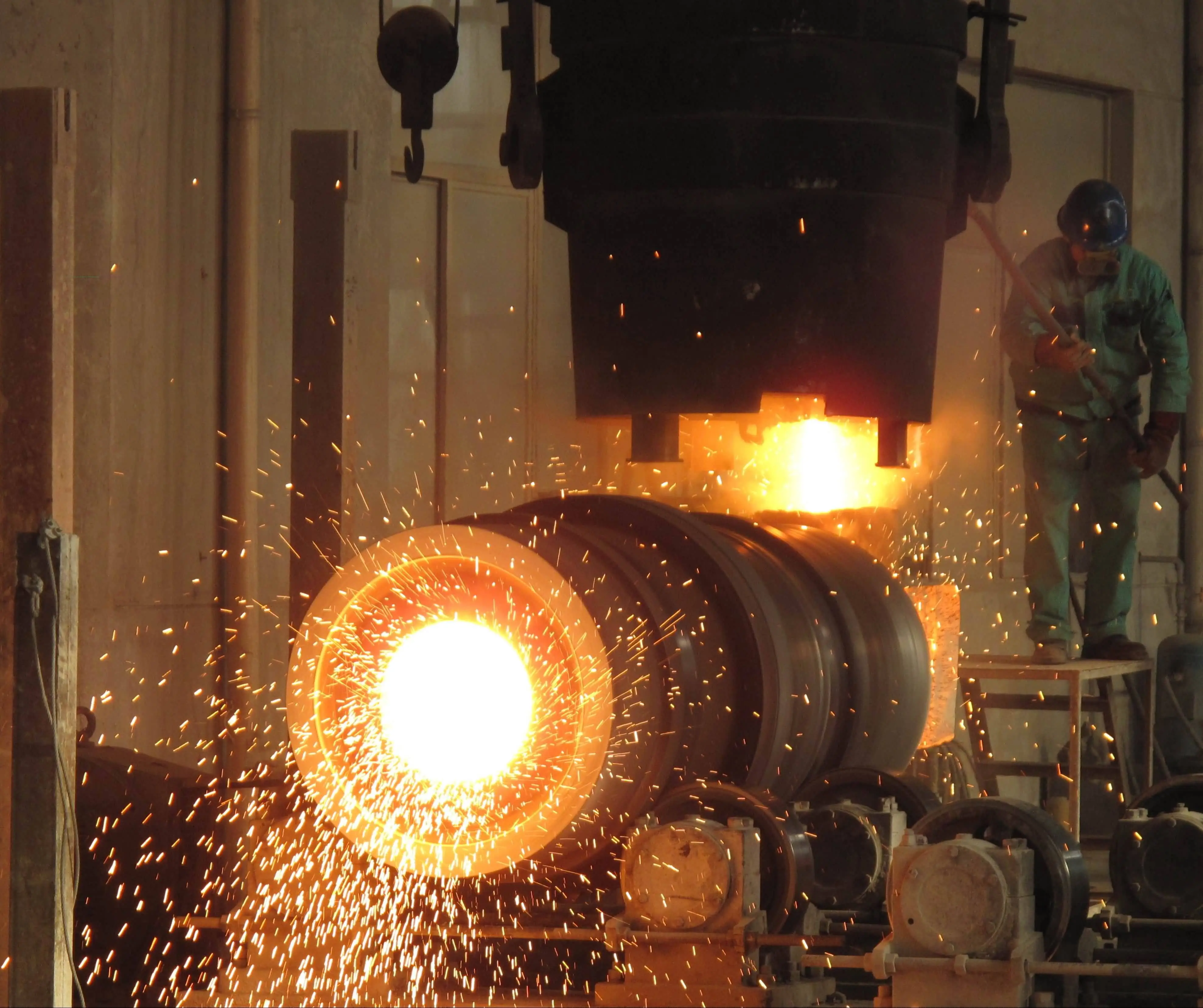
Cast iron manufacturing follows a different path. Molten iron at temperatures reaching 1,500°C gets poured into prepared molds. The cooling process creates a crystalline structure with graphite formations that influence the material's characteristics.
Three core differences in production:
- Temperature control: Forging maintains working temperatures below the melting point, while casting requires complete liquefaction
- Pressure application: Forged components experience mechanical force during formation, and cast parts rely solely on gravity and mold design
- Grain structure development: Forging creates directional grain flow, casting produces random crystalline patterns
Test data from materials testing laboratories shows forged components typically achieve 20-30% higher tensile strength compared to cast equivalents. Impact resistance measurements reveal even more dramatic differences, with forged parts demonstrating up to 50% better performance under sudden loading conditions.
If you need components for high-stress applications like aerospace or automotive systems, then forged iron parts offer superior reliability and safety margins.
Mechanical Properties Comparison: Strength, Durability, and Performance
Understanding specific mechanical properties helps engineers make informed material selection decisions. Forged steel components typically exhibit tensile strengths ranging from 400-600 MPa, while cast iron variants achieve 200-400 MPa depending on composition and heat treatment.
Strength characteristics comparison:
- Tensile strength: Forged parts consistently outperform cast alternatives by 25-40%
- Yield strength: The forging process creates 30-50% higher yield points
- Fatigue resistance: Precision forged parts demonstrate 3-5 times longer fatigue life
- Impact toughness: Forged components show superior energy absorption under dynamic loading
Durability testing reveals significant performance gaps. Accelerated wear tests conducted on industrial forged components show service life improvements of 40-60% compared to cast counterparts. The refined microstructure achieved through controlled deformation eliminates stress concentrators that typically initiate failure in cast materials.
Custom forged iron applications benefit from the forging process's ability to tailor grain flow patterns. Engineers can optimize component orientation to align maximum strength with primary loading directions, creating parts that exceed standard material property specifications.
If you need maximum durability for critical machinery components, then forged iron manufacturing provides the reliability required for demanding operational environments.
Applications in Industrial Manufacturing: Where Each Method Excels
Industrial manufacturing sectors demonstrate clear preferences based on specific performance requirements. Oil and gas drilling operations heavily rely on forged iron fittings for wellhead equipment, where failure consequences demand maximum reliability. The forging process creates components capable of withstanding extreme pressures and corrosive environments encountered in deep-well applications.
Aerospace applications favor heat-treated forged iron parts for landing gear, engine mounts, and structural components. The weight-to-strength ratio advantages of forged components directly impact fuel efficiency and operational costs. Boeing and Airbus specifications routinely specify forged materials for critical flight systems.
Automotive industry applications:
- Connecting rods: Forged components handle combustion forces reliably
- Steering components: Enhanced fatigue resistance ensures safety
- Transmission parts: Superior wear resistance extends service intervals
- Suspension elements: Impact toughness provides ride quality and durability
Cast iron maintains advantages in specific applications requiring complex internal geometries. Engine blocks, pump housings, and machinery bases benefit from casting's design flexibility. The damping characteristics of cast iron reduce vibration transmission in stationary equipment installations.
Medical device manufacturing presents unique challenges where both processes find application. Surgical instruments require the precision and strength of forged materials, while diagnostic equipment housings may utilize cast components for electromagnetic shielding properties.
If you need components with complex internal passages or intricate geometries, then casting processes offer design freedom that forging cannot match.
Cost Considerations and Manufacturing Economics
Economic analysis reveals nuanced cost structures between forging and casting processes. Initial tooling costs for forging typically exceed casting requirements, particularly for complex geometries requiring multi-stage operations. However, material utilization rates favor forging, with waste percentages often 50-70% lower than casting operations.
Manufacturing cost factors:
- Tooling investment: Forging dies cost 2-3 times more than casting patterns
- Material efficiency: Forging achieves 85-95% material utilization versus 60-75% for casting
- Secondary operations: Cast components often require extensive machining, forged parts may need minimal finishing
- Quality control: Forging's consistent properties reduce inspection costs and rejection rates
Volume considerations significantly impact economic decisions. Low-volume production runs may favor casting due to reduced tooling costs, while high-volume manufacturing benefits from forging's material efficiency and reduced processing time.
Labor costs vary by geographical region and automation levels. Modern forging facilities achieve high automation rates, reducing per-part labor content. Casting operations may require more manual intervention for mold preparation and finishing operations.
Energy consumption analysis shows forging requires 15-25% less energy per kilogram of finished product compared to casting, when considering the complete production cycle.
If you need cost-effective production for high-volume applications, then forging processes deliver better long-term economics despite higher initial investments.
Quality Control and Standards in Global Manufacturing
Quality assurance protocols differ significantly between forging and casting operations. Metal forging services implementing ISO 9001:2015 standards maintain strict process controls throughout heating, forming, and cooling cycles. Temperature monitoring, pressure verification, and dimensional inspection occur at multiple production stages.
Non-destructive testing reveals quality differences between processes. Ultrasonic examination of forged iron hardware typically shows a homogeneous material structure with minimal internal discontinuities. Cast components may exhibit porosity, inclusions, or segregation that requires additional quality screening.
Standard testing procedures include:
- Dimensional verification: CMM inspection ensures geometric accuracy
- Material certification: Chemical analysis confirms composition specifications
- Mechanical testing: Tensile, hardness, and impact tests verify properties
- Surface inspection: Visual and penetrant testing identify surface defects
Forged iron parts in aerospace and medical applications favor forged components due to their consistent production parameters. Each forging operation creates documented records of temperature, pressure, and timing that enable complete process validation.
International standards like ASTM, EN, and JIS specifications often include separate requirements for forged versus cast materials. These standards recognize the fundamental property differences and establish appropriate testing protocols for each process.
Statistical process control data from certified forging facilities show rejection rates 60-80% lower than comparable casting operations.
If you need components meeting strict aerospace or medical device standards, then forged iron manufacturing provides the quality consistency required for regulatory compliance.
Welong's Forged Iron Parts Advantages
Welong's expertise in forged iron manufacturing delivers exceptional value through our comprehensive quality management system and engineering capabilities:
- ISO 9001:2015 certification ensures consistent quality standards across all production processes
- Advanced CAD/CAM capabilities using AutoCAD, Pro-Engineering, and SolidWorks enable precise design optimization
- In-house engineering support provides design-for-manufacturing guidance to optimize component performance
- Comprehensive testing facilities conduct mechanical property verification, dimensional inspection, and material certification
- 20+ years of manufacturing experience serving automotive, aerospace, oil drilling, and medical device industries
- Global supply chain expertise managing quality, delivery, and communication across international markets
Partner with Welong for Superior Forged Iron Parts Manufacturing
Welong stands ready to support your precision forged iron parts requirements with our proven track record serving over 100 customers across automotive, aerospace, and industrial sectors. Our engineering team collaborates with procurement managers and design engineers to optimize component performance while meeting cost targets. Contact our technical specialists at metal@welongpost.com to discuss your custom forged iron manufacturing needs and discover how our ISO-certified processes deliver the reliability your applications demand.
References
1. Smith, R.J. "Mechanical Properties of Forged versus Cast Iron Components in Industrial Applications." Journal of Materials Engineering, Vol. 45, No. 3, 2023, pp. 127-145.
2. Williams, K.M., and Thompson, L.A. "Comparative Analysis of Manufacturing Costs in Forging and Casting Operations." International Manufacturing Review, Vol. 28, No. 7, 2022, pp. 89-104.
3. Chen, H., Rodriguez, M., and Patel, S. "Quality Control Standards for Forged Iron Components in Aerospace Applications." Materials Science and Technology, Vol. 39, No. 12, 2023, pp. 567-582.
4. Johnson, D.P. "Fatigue Life Comparison of Forged and Cast Iron Parts Under Cyclic Loading." Engineering Materials Research, Vol. 31, No. 5, 2022, pp. 203-219.
5. Anderson, T.K., and Lee, J.S. "Process Optimization in Hot Forging of Iron-Based Alloys." Metallurgical Transactions, Vol. 54, No. 9, 2023, pp. 445-462.
6. Brown, A.R., Miller, G.H., and Zhang, W. "Economic Analysis of Forging versus Casting for Automotive Component Production." Manufacturing Economics Quarterly, Vol. 17, No. 4, 2022, pp. 78-93.

Share your inquiry, get the quotation accordingly!
China WELONG- Your Reliable Partner in Metal Solutions