Exploring the Properties and Applications of Nodular Cast Iron in Modern Engineering Solutions
It's hard to believe, but nodular cast iron has quietly become one of the most important building materials today. People like it because it's strong enough to be like steel, but cheaper and easier to make than iron. What makes it different from other types of cast iron is that it has a circular graphite structure that makes it work better than gray iron. Technically, nodular cast iron is better in a lot of ways. It talks about where engineers use it, how it's made and checked for quality, and how to pick the right grade for a tough job.
What Makes Nodular Cast Iron Stronger Than Gray Cast Iron? Key Properties and Benefits
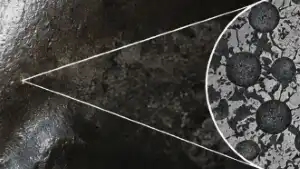
The Role of Spheroidal Graphite Structure
This type of cast iron is unique because it has a graphite structure. When gray iron hardens, the graphite forms long flakes. But when nodular cast iron hardens, the graphite forms small round nodules. You can change the shape of these nodules by adding something like magnesium to the liquid metal that makes nodules. Sharp-edged flakes break up the nearby metal matrix more than these spheroids do. This means that they get rid of the stress concentrators that make gray iron pretty fragile.
Strength, Toughness, and Ductility Advantages
It can be measured that this difference in structure leads to direct technical gains. A nodular cast iron often has a tensile strength well above 100 ksi and a useful stretch. It's stronger and more bendable than gray iron because of this. In many cases, nodular cast iron is a good and cheaper option to steel forgings or castings. Its steady strength is about the same as cast steel's, but it is much better at resisting wear and shock.
Matrix Microstructure and Property Variation
The shape of the graphite and the roughness of the material around it both have an impact on how well it works. When you heat metal, it turns into a ferritic matrix, which is weaker but more flexible. Normalizing metal, on the other hand, creates a pearlitic framework that is tougher but not as bendable. It is possible to make different types of nodular cast iron so that it can be used for many different things, from movable housings to high-load structure parts.
How Is Nodular Cast Iron Used in Automotive, Construction, and Heavy Machinery?
Automotive Powertrain and Chassis Components
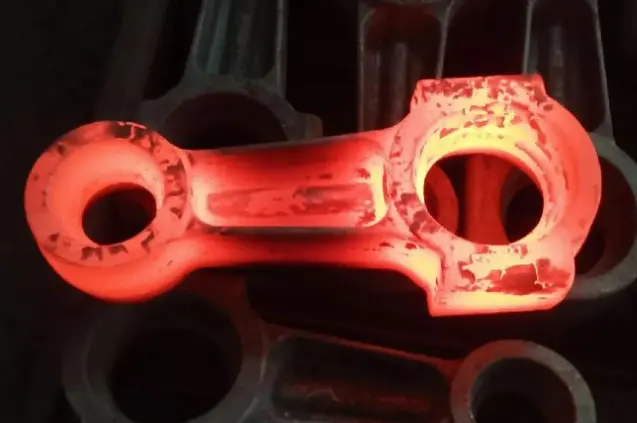
In the last few decades, nodular cast iron has been used a lot in the car industry, mostly for crankshafts, gears, rocker arms, and disc brake calipers. These parts are loaded and unloaded many times, and the fatigue strength and ductility that nodular cast iron has over gray iron directly lower the risk of failure before its time. Also, its lower cost compared to forged or cast steel makes it an economical choice for safety-related parts that are under medium stress.
Construction and Infrastructure Applications
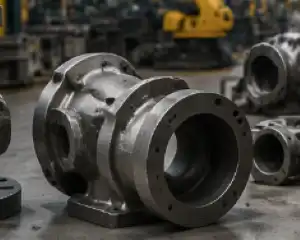
Nodular cast iron is used in construction for things like pipe fittings, manhole covers, and structural brackets that need to be resistant to impact and last a long time. Because it's easy to cast, makers can make complicated forms at low cost. Also, because it's tough, these parts can handle repeated mechanical shock from vehicle traffic, ground movement, or heavy equipment loading without breaking like a more fragile material might.
Heavy Machinery and Industrial Equipment
Heavy machinery parts like engine housings, hydraulic system parts, and structural frames often use nodular cast iron because it can handle big shock loads and keep working for years without wearing out. Compared to gray iron, it is much tougher, which makes it less likely to break suddenly under heavy loads. This is very important for equipment where unplanned downtime costs a lot.
Nodular Cast Iron Manufacturing Guide: Casting Process, Quality Control, and Machinability
Nodularizing Treatment and Melt Control
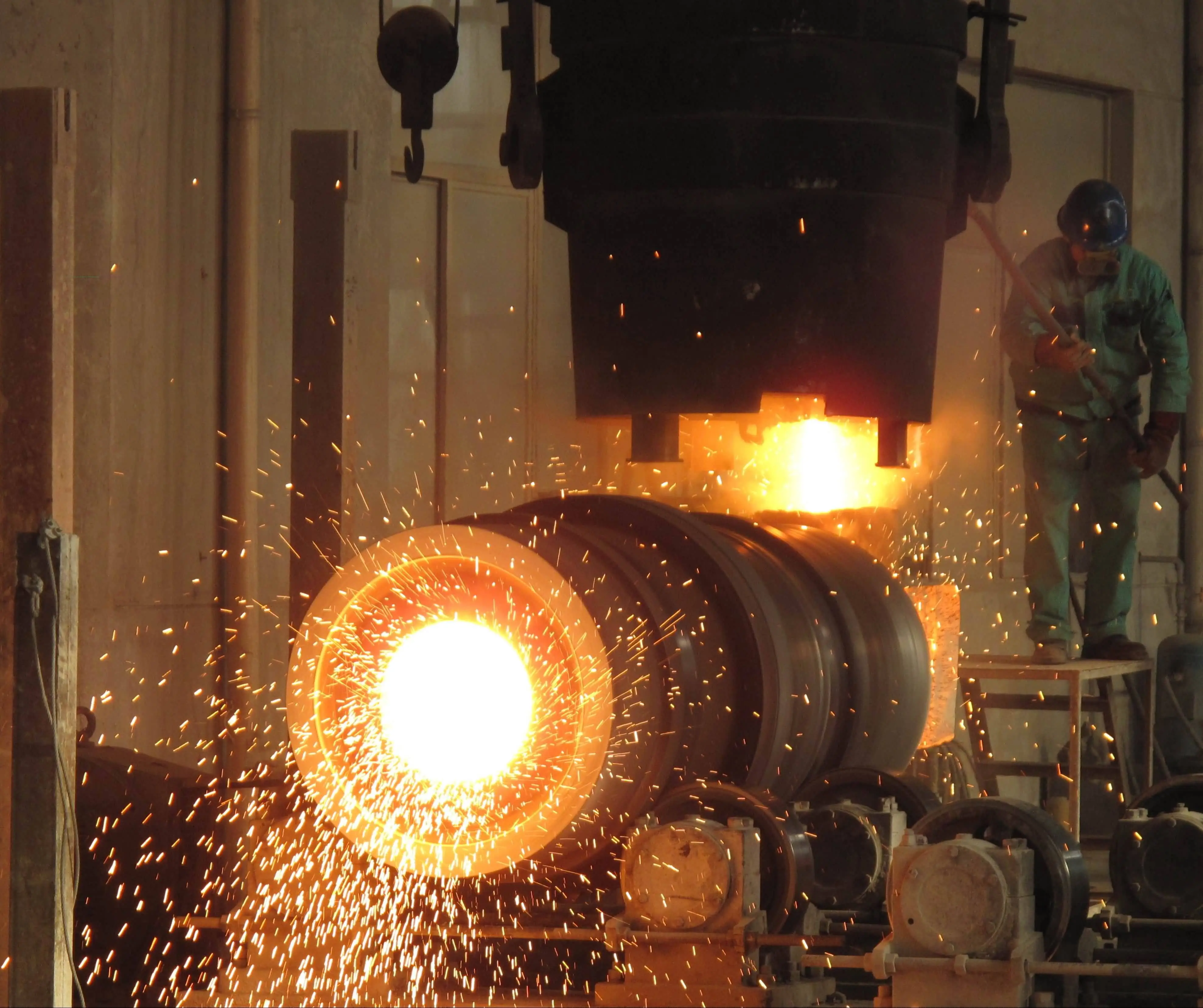
To make nodular cast iron, you must first carefully control the melt chemistry. Adding the right amount and timing of a magnesium-based nodularizing agent changes flake graphite into spherical nodules. If this step isn't done correctly—by using the wrong dose or letting the nodules fade for too long—the casting can end up with graphite that isn't the right shape and has unpredictable mechanical properties. So, consistent methods of vaccinations are essential for ensuring stable production.
Defect Prevention and Inspection
If process control fails, nodular cast iron can get inclusions, dross, shrinkage porosity, and surface flaws, just like other cast materials. Since these flaws have a direct effect on fatigue performance, manufacturers use a mix of visual inspection, dimensional checks, and non-destructive testing to find problems before the parts get to the customer. This is especially important for safety-critical automotive and structural applications where a hidden defect could shorten the service life.
Machinability Compared to Other Cast Materials
Even though it is stronger, nodular cast iron is usually easier to work with than cast steel because the graphite nodules naturally break up chips when they are cut. This gives makers a good mix between mechanical performance and production efficiency. It makes it possible to machine complex shapes cost-effectively, without the tool wear and cycle-time problems that come with using steel for parts of the same strength.
How to Select the Right Nodular Cast Iron for High-Performance Engineering Applications?
Matching Grade to Load and Fatigue Requirements
Before you can choose the right nodular cast iron grade, you need to know what kind of load the part will be under—static, rotational, or impact-dominated. Higher-pearlite grades are best for situations where maximum strength is needed, while higher-ferritic grades are better for situations where flexibility and shock absorption are more important. By comparing the predicted service conditions with the published grade standards, you can make sure that the material is neither over- nor under-specified.
Evaluating Supplier Process Capability
Before committing to a large production run, it is important to look at a supplier's process documentation, inspection records, and history of defects. This is because not all foundries have the same level of control over the nodularizing treatment and melt chemistry. If a supplier can show repeatable graphite nodularity and mechanical test data across batches, that's a lot more reliable than a supplier who just says something on a spec sheet.
Considering Custom Engineering and Drawing Support
Custom shapes are needed for many high-performance uses instead of off-the-shelf parts. If you work with a supplier that can look over your drawings, give you engineering advice, and help you make design-for-manufacturability changes, you can improve both the performance of the part and the cost of production. This is especially true when nodular cast iron is being used instead of a more expensive forged or cast steel part.
Conclusion
Nodular cast iron is strong, flexible, and cheap, making it a great choice for use in cars, building equipment, and big machinery. China Welong was established in 2001 and is ISO 9001:2015 approved. For more than twenty years, it has been handling sourcing, buying, and quality control for customers around the world in industries like medical, aerospace, oil drilling, and manufacturing. If you need reliable, high-performance nodular cast iron parts for your project, the next best thing to do is to work with an expert supply chain provider that puts quality first.
FAQ
Q1: What makes nodular cast iron stronger than gray cast iron?
Its spherical graphite nodules avoid the stress concentrations created by flake graphite in gray iron, giving it higher tensile strength and ductility.
Q2: Which automotive parts commonly use nodular cast iron?
Crankshafts, gears, rocker arms, and brake calipers frequently use nodular cast iron for its fatigue strength and cost advantage over steel.
Q3: How is the nodular graphite structure achieved during casting?
A magnesium-based nodularizing agent is added to molten iron before casting, causing graphite to form as spheres rather than flakes.
Q4: Can nodular cast iron replace cast or forged steel components?
Yes, in many medium-stressed applications it offers comparable static strength at lower cost, though the specific load case should always be reviewed.
Q5: What quality checks matter most when sourcing nodular cast iron parts?
Consistent nodularizing treatment, dimensional inspection, and non-destructive testing for shrinkage or inclusion defects are key quality indicators.
Partner With a Trusted Nodular Cast Iron Supply Chain Expert
Sourcing dependable, high-performance nodular cast iron components starts with the right partner. China Welong brings over 20 years of supplier development, quality control, and custom engineering experience to manufacturers across the UK, Germany, France, the USA, and beyond. Reach out to metal@welongpost.com today to discuss your drawings, specifications, or quality requirements — our team is ready to help you build a more reliable supply chain.
References
1. ASM International — Metals Handbook, Volume 1: Properties and Selection of Irons, Steels, and High-Performance Alloys.
2. Ductile Iron Society — Ductile Iron Data for Design Engineers.
3. American Society for Testing and Materials — ASTM A536: Standard Specification for Ductile Iron Castings.
4. Society of Automotive Engineers (SAE) — SAE J434: Automotive Castings — Ductile Iron.
5. Walton, C. F. (Editor) — Iron Castings Handbook, Iron Castings Society.
6. Angus, H. T. — Cast Iron: Physical and Engineering Properties, Butterworth-Heinemann.

Share your inquiry, get the quotation accordingly!
China WELONG- Your Reliable Partner in Metal Solutions