Drop Forged vs Pressed Forged: Choosing the Right Forging Method
The choice between drop forging and pressed forging relies on the needs of the application, the amount of production, and the level of accuracy required. Drop forging is great for making strong parts with great grain structure and mechanical properties. This makes it perfect for high-stress jobs in the aerospace and car industries. Pressed forging is great for making precise parts that don't need a lot of cutting because it gives the best surface finish and accuracy in size. Knowing these drop forging basic differences helps procurement managers make smart choices that balance performance, cost, and the speed of production for the metal parts they make.

Understanding Metal Forming Fundamentals
Controlled deformation is used in metal forming methods to shape raw materials into finished parts. It is a type of closed-die forging where hot metal flows into perfectly machined die cavities. Drop forging and press forging are both examples of this. The main change is how the force is applied to the piece of work. Drop forging hits things quickly and hard with the impact energy from dropping weights or hammers. When you press forge something, constant pressure is applied through hydraulic or mechanical systems.
Three core differences emerge:
- Energy delivery method - Impact versus continuous pressure
- Deformation rate - High-speed versus controlled slow forming
- Die fill characteristics - Dynamic flow versus static compression
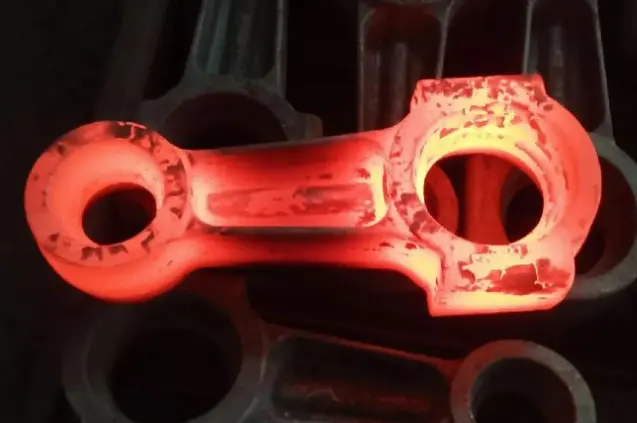
These differences have a big effect on the final forged parts' grain flow patterns, mechanical qualities, and dimensional tolerances. Because the grain structure develops better in drop forging, it is better for making parts that will be hit hard, like connecting rods or crankshafts.
Drop Forging Process Analysis
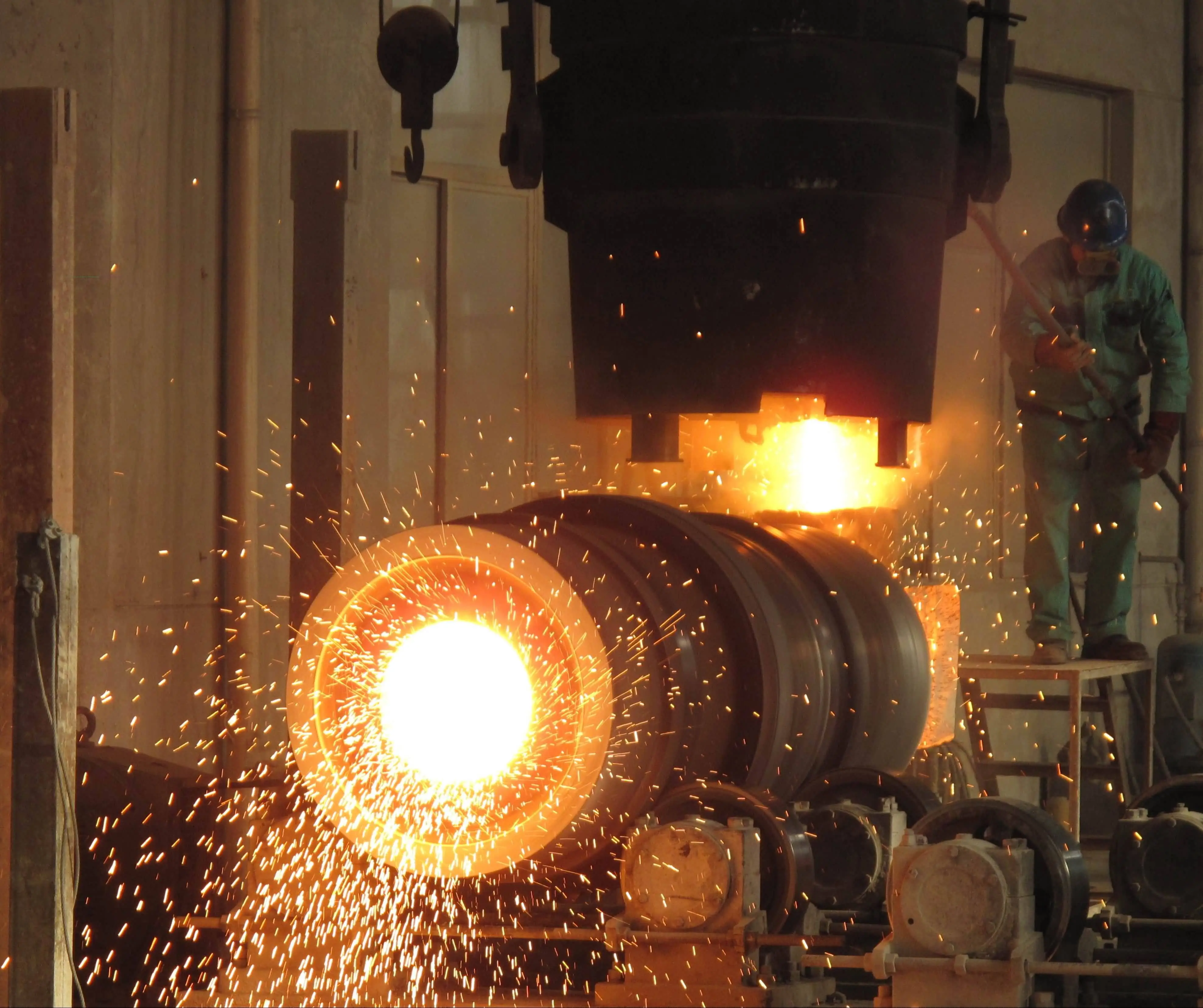
Drop forging uses tools that weigh between 500 and 50,000 pounds and deliver kinetic energy through gravity or power. The fast collision makes the metal flow in a dynamic way, which makes parts that are very strong.
Process advantages include:
- Superior grain flow alignment with component geometry
- Enhanced mechanical properties through rapid deformation
- Excellent consolidation of internal voids
- Higher production rates for medium-complexity parts
- Lower initial tooling costs compared to large press systems
Forging hammer strikes cause instantaneous pressure spikes of up to 100,000 psi, which press the metal into the die's intricate details. This quick deformation smooths out the grain structure, which makes the tensile strength 15–25% higher than with polished options. When metals are hit, they cool quickly, which changes their mechanical qualities. This makes heat treatment integration very important. The best mix of hardness and ductility is achieved by controlling the temperature correctly. You can get better performance from drop forging because of the way it deforms. This is especially true for parts of car suspension or oil drilling tool joints that need to be very resistant to wear.
Pressed Forging Technology Deep Dive
For press forging, hydraulic or mechanical presses with up to 75,000-ton-force are used. The steady, controlled pressure makes it possible to precisely control the flow of metal and get very accurate measurements.
Key technological benefits:
- Dimensional tolerances within ±0.005 inches are achievable
- Consistent wall thickness throughout complex geometries
- Minimal flash generation reduces material waste
- Better control over grain flow direction
- Excellent surface finish quality
The steady pressure application of drop forging lets the whole die be filled, which is especially helpful for aerospace parts that need complicated internal passageways. It is still possible to control the rate of deformation, which stops thermal gradients that could damage the metal's structure. Press forging can handle bigger pieces of work; in some places, it can handle parts that weigh more than 100,000 pounds. Forging flaws like underfilling and cold shuts that happen a lot in rapid impact processes are less likely to happen in the controlled setting.
Test data comparison reveals:
- Surface roughness: 63-125 microinches (press) vs 125-250 microinches (drop)
- Dimensional variation: ±0.003-0.008" (press) vs ±0.008-0.015" (drop)
- Flash thickness: 0.050-0.125" (press) vs 0.125-0.375" (drop)
If you need precise parts for medical devices or high-end aircraft parts that need to fit together tightly, pressed forging gives you the best control over the dimensions and quality of the surface.
Performance Comparison: Mechanical Properties
Drop forging and press forging have different mechanical properties because they use different deformation processes and create different microstructures. Knowing about these differences helps you choose the right process for each application.
Strength characteristics analysis:
Drop forging typically achieves:
- Tensile strength: 85,000-180,000 psi
- Yield strength: 60,000-150,000 psi
- Impact resistance: Superior due to refined grain structure
- Fatigue life: 25-40% higher than machined equivalents
Press forging delivers:
- Tensile strength: 80,000-170,000 psi
- Yield strength: 55,000-140,000 psi
- Dimensional stability: Exceptional through controlled deformation
- Surface integrity: Superior finish, reducing stress concentrations
The rapid deformation in drop forging creates favorable grain flow patterns, particularly beneficial for components subjected to cyclic loading. Press forging's controlled environment produces more uniform properties throughout the component cross-section.
Material utilization efficiency:
- Drop forging: 85-90% material utilization
- Press forging: 90-95% material utilization
Grain flow optimization varies between processes. Drop forging excels in aligning fiber structure with principal stress directions, while press forging maintains consistent properties in multiple orientations. If you need components for rotating machinery or high-stress structural applications, then drop forging's superior grain refinement provides enhanced durability and service life.
Economic Considerations and Production Efficiency
Cost analysis encompasses tooling investment, production rates, material utilization, drop forging, and secondary operations. Both processes offer distinct economic advantages depending on production volume and component complexity.
Initial investment comparison:
Drop forging equipment:
- Hammer systems: $200,000-$2,000,000
- Die costs: $15,000-$150,000 per set
- Setup time: 2-6 hours
- Production rate: 60-300 pieces/hour
Press forging systems:
- Hydraulic presses: $500,000-$5,000,000
- Die costs: $25,000-$300,000 per set
- Setup time: 4-12 hours
- Production rate: 20-150 pieces/hour
Operating costs favor drop forging for medium-volume production due to higher cycle rates and lower energy consumption per piece. Press forging becomes economical for high-precision, low-volume applications where secondary machining reduction justifies higher processing costs.
Total cost of ownership includes:
- Energy consumption: Drop forging uses 30-50% less energy per pound
- Maintenance requirements: Press systems require more frequent hydraulic service
- Labor intensity: Press forging needs more skilled operators
- Quality control: Press forging reduces inspection requirements
If you need cost-effective production for automotive components with volumes exceeding 10,000 pieces annually, then drop forging provides superior economic returns through higher throughput and lower processing costs.
Quality Control and Compliance Standards
Quality assurance in forging operations demands comprehensive testing protocols ensuring compliance with international standards, including ISO 9001:2015, AS9100, and industry-specific certifications.
Critical quality parameters:
Dimensional verification:
- Coordinate measuring machines (CMM) for complex geometries
- Statistical process control maintains Cpk values >1.33
- First article inspection protocols
- In-process monitoring systems
Metallurgical testing requirements:
- Tensile testing per ASTM E8 standards
- Hardness verification using Rockwell or Brinell methods
- Ultrasonic inspection for internal defect detection
- Magnetic particle inspection for surface crack identification
Non-destructive testing protocols:
- Visual inspection for surface quality assessment
- Penetrant testing reveals surface discontinuities
- Ultrasonic examination detects internal flaws
- Dimensional inspection ensuring specification compliance
Documentation requirements include material certificates, process parameters, drop forging, and traceability records essential for aerospace and medical device applications. Welong's ISO 9001:2015 certified quality system ensures consistent compliance across all forging operations, providing complete documentation packages supporting customer audits and regulatory requirements. If you need components meeting stringent aerospace or medical device regulations, then partnering with certified suppliers offering comprehensive quality documentation proves essential for regulatory compliance and risk mitigation.
Application-Specific Selection Guidelines
Selecting optimal forging methods requires analyzing specific application demands, operating environments, and performance requirements. Industry-specific considerations guide process selection, ensuring component reliability and cost-effectiveness.
Aerospace applications:
Critical components like landing gear struts, engine mounts, and structural fittings demand exceptional strength-to-weight ratios and fatigue resistance. Drop forging excels for highly stressed parts, while press forging suits precision brackets and housings requiring tight tolerances.
Automotive industry requirements:
Connecting rods, crankshafts, and suspension components benefit from drop forging's superior grain structure and impact resistance. Transmission cases and precision gear components leverage press forging's dimensional accuracy and surface finish quality.
Oil and gas applications:
Drilling tool joints, valve bodies, and pressure vessel components operate under extreme conditions requiring exceptional toughness. Drop forging provides superior grain flow patterns essential for cyclic stress resistance.
Medical device considerations:
Surgical instruments and implant components demand biocompatible materials with precise dimensions and superior surface finish. Press forging's controlled environment ensures consistent properties and minimal contamination risk.
Selection criteria matrix:
- High stress/fatigue applications: Drop forging preferred
- Precision requirements <±0.005": Press forging recommended
- Complex internal geometries: Press forging is advantageous
- High production volumes: Drop forging is cost-effective
- Large component sizes: Press forging capability advantage
If you need oil drilling components withstanding extreme downhole conditions, then drop forging delivers superior fatigue resistance and grain structure optimization essential for reliable performance.
Welong's Drop Forging Advantages
Advanced Manufacturing Capabilities:
- State-of-the-art hammer systems ranging from 1,000 to 15,000 pounds in capacity
- Precision die design using SolidWorks and Pro-Engineering software
- Complete heat treatment facilities ensuring optimal metallurgical properties
- In-house machining capabilities reduce lead times and costs
- ISO 9001:2015 certified quality management system
Technical Expertise and Support:
- Engineering team drop forging with 20+ years of forging experience
- Design optimization services reduce material costs by 15-25%
- Metallurgical consulting ensures proper alloy selection
- Prototype development capabilities are accelerating product launches
- Reverse engineering services from samples or drawings
Quality Assurance Excellence:
- CMM inspection equipment ensures dimensional accuracy
- Complete material traceability from raw material to finished product
- Ultrasonic and magnetic particle testing capabilities
- Statistical process control maintains consistent quality
- Third-party testing coordination for certification requirements
Global Supply Chain Management:
- Established relationships with premium steel suppliers
- Inventory management reduces customer carrying costs
- Logistics coordination to ensure on-time delivery
- Customs documentation and compliance support
- Multi-language technical support teams
Conclusion
When deciding between drop forging and press forging, you need to carefully think about the needs of the application, the amount of output, and the quality standards. When you need better mechanical qualities and fatigue resistance, drop forging is the way to go. Press forging, on the other hand, gives you the best accuracy in measurements and surface finish. You can get different benefits from each process based on the needs of the parts and the cost. To be successful, you need to work with suppliers who have been in business for a while, know what your industry needs, and can offer full engineering help throughout the whole product development process.
Partner with Welong for Superior Drop Forging Solutions
Welong's two decades of drop forging expertise deliver customized metal components meeting the most demanding industrial applications. Our ISO 9001:2015 certified processes, drop forging advanced engineering capabilities, and commitment to quality excellence make us your ideal drop forging supplier. From initial design consultation through final delivery, our experienced team ensures your components meet specifications while optimizing costs and lead times. Contact us at metal@welongpost.com to discuss your forging requirements and experience the Welong difference.
References
1. Altan, T., & Tekkaya, A.E. (2019). Sheet Metal Forming: Fundamentals and Applications. ASM International Press.
2。 Bhadeshia, H.K.D.H. (2020). "Metallurgical Principles in Hot Forging Processes." Journal of Manufacturing Science and Engineering, 142(8), 081005.
3. Davis, J.R. (Ed.). (2021). ASM Metals Handbook: Forming and Forging. 9th Edition, ASM International.
4. Groover, M.P. (2018). Fundamentals of Modern Manufacturing: Materials, Processes, and Systems. 6th Edition, John Wiley & Sons.
5. Lange, K., & Singh, U.P. (2020). "Comparative Analysis of Drop Hammer and Hydraulic Press Forging Technologies." International Journal of Advanced Manufacturing Technology, 108(3), 891-904.
6. Semiatin, S.L. (2019). Metalworking: Bulk Forming - Forming and Forging Handbook. ASM International Press.

Share your inquiry, get the quotation accordingly!
China WELONG- Your Reliable Partner in Metal Solutions