Ceramic Foundry Sand Application

Products and services
Dec 12, 2025
|
0

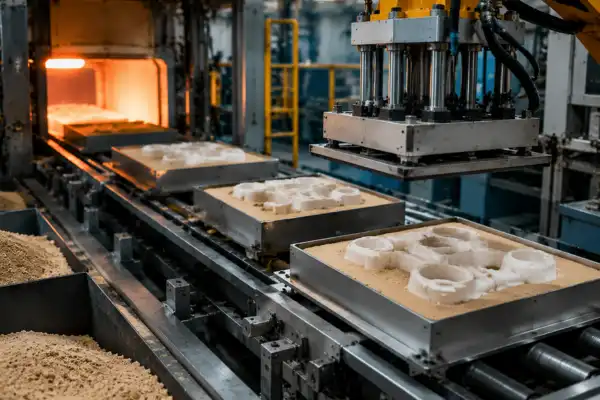
Ceramic foundry sand has changed the casting business by providing better performance and more options for different foundry uses. This new material is made up of very pure ceramic particles and gives cast metal goods great resistance to heat, stability in shape, and a smooth finish. Unlike most foundry sands that are made from silica, ceramic sand is very stable when it comes to temperature and chemicals. This makes it possible to make more accurate and consistent castings that are more complicated and detailed. Because of its special features, it works really well for casting at high temperatures, like when steel, superalloys, and other tough materials are used. Ceramic foundry sand has become a game-changing technology that helps foundries meet stricter standards for precision, durability, and efficiency in their casting processes. This is because industries are always looking for new ways to make high-quality metal parts.

What are the key advantages of using ceramic sand in foundry applications?

Superior heat resistance and thermal stability

That's why ceramic sand is great for casting at high temperatures: it doesn't melt easily and stays stable at high temperatures. Ceramic sand, not like regular silica sand, stays in shape even when temperatures are very high or very low. The less likely it is that flaws in cast goods will be caused by temperature changes, the better. This feature makes it easier for foundries to make complex castings that are more accurate and regular. This is especially helpful when they need to pour hot materials. More stable at high temperatures, ceramic sand also makes molds stronger. This makes it less likely that molds will break or wear away during the casting process. Foundries can make finished things with better surface finishes and tighter tolerances for size because of this. This means they need less work to be done after casting, and the quality is better all around.

Excellent surface finish and dimensional accuracy

The special features of ceramic sand particles make a big difference in how well cast goods finish and how accurately they are sized. The ceramic particles are all the same size and shape, so they make the mold surface smoother. This makes casts with smoother surfaces and better detail reproduction. For making parts with complicated geometries or fine surface features, this trait is especially helpful. Because ceramic sand improves the surface quality, many times extensive post-casting finishing processes are not needed. This saves time and resources in the manufacturing process. Also, ceramic sand molds are dimensionally stable during the casting process, which means that the finished goods keep their shape and size with little distortion. In fields like aerospace and automotive, where tight tolerances and uniform quality are very important, this level of accuracy is very important.

Improved reusability and environmental benefits

If you want something that lasts longer and doesn't hurt the earth as much, ceramic sand is the way to go. In hot weather, ceramic sand doesn't change much, so it can be used over and over again without breaking. This means you don't have to change the sand as often. This helps things be used again and again, which saves foundries money on materials and less trash that needs to be thrown away. Some ceramic sand doesn't have any chemicals or binders that are bad for the land, either. For foundries, this makes it a better choice. Ceramic sand is better for the earth, which fits with the growing desire in business to be green and follow the rules. And because they don't have to buy new sand all the time and pay for shipping costs, being able to recycle and use ceramic sand again speeds up the casting process and saves money.

How does ceramic sand compare to traditional foundry sands in terms of performance?

Enhanced thermal conductivity and cooling rates

It's important to know that ceramic sand moves heat around better than regular casting sands. This has a big effect on how the casting is done and how well the finished product turns out. Ceramic sand moves heat around better than other types of sand, so it helps cast metal cool faster and more evenly. This makes the grains flatter and the metal's function better. Sometimes you need to cast things that change quickly when they cool, like some metals used in airplanes. Ceramic sand helps foundries control and boost the rate at which metal cools. In this way, they can get the microstructures they need and cut down on the flaws in the casting that come from temperature differences. Also, clay sand can cut down on the time it takes to harden because it moves heat around better. This could make things go faster and use less cooking energy.

Reduced metal-sand reactions and improved casting quality

Chemical inertness and resistance to metal-sand reactions are two big reasons why ceramic sand is better than regular casting sand. This quality is very important for making good castings, especially when working with metals or alloys that respond. Because metal-sand reactions are less likely to happen, surface flaws like burn-on and metal penetration are less likely to happen. These flaws can damage the integrity and appearance of cast goods. Additionally, ceramic sand's chemical stability helps improve surface finish and accuracy in measurements by reducing the formation of flaws caused by gas. In situations where high-quality standards must be met, like when making important parts for the aerospace and automotive businesses, this quality is very useful. Using ceramic sand can greatly lower the number of casting rejects and rework, which will eventually make production more efficient and save money.

Increased mold strength and reduced binder requirements

Ceramic sand is better at holding molds together than regular foundry sands, which has many benefits in the casting process. Because the mold is stronger, it's possible to make castings with thinner walls and finer details that are more complicated and detailed. The ability to do this gives engineers and makers more design options, which lets them make parts that are both light and strong. Also, ceramic sand makes molds stronger, so they are less likely to break or wear away while metal is poured into them. This makes the end castings more accurate in size and finish. One big benefit of clay sand is that it doesn't need as much binder. Because ceramic sand bits have a special surface, they can bond well with smaller amounts of binder materials. Cutting down on the use of binder not only saves money, but it also makes the casting process better for the earth by cutting down on the waste and emissions that come from binder materials.

What are the key applications and industries benefiting from ceramic sand technology?

Aerospace and defense industry applications

Space and defense companies were quick to adopt ceramic sand technology because it meets their high standards for quality and performance. Ceramic sand is great for making difficult and important parts like engine casings, turbine blades, and structural parts for planes and military gear. With ceramic sand, you can make things that are very strong and fit together perfectly. This is because it gives you the best surface finish and most accurate measures. Because it can work with high-temperature metals like nickel-based superalloys, ceramic sand is also very useful in airplane-building. Ceramic sand makes molds better and cuts down on the number of flaws that happen. This makes defense and aircraft parts more reliable and boosts their performance. This makes military and airplane equipment safer and more useful in the long run.

Automotive industry and precision component manufacturing

Ceramic sand is being used more and more in the car industry to cast different engine parts, transmission parts, and structural parts of vehicles. Ceramic sand is great for making complex engine blocks, cylinder heads, and other parts of the drivetrain that need tight tolerances and a smooth surface because it improves the surface finish and accuracy of the dimensions. Additionally, the ability to cast thin-walled parts with ceramic sand helps the auto industry make cars that are lighter and use less gas. Ceramic sand is used to make precise parts for medical devices, robots, and high-end consumer goods, among other fields. The better fine reproduction and surface finish that ceramic sand can provide make it a great choice for casting parts that need little post-processing and look great. Using ceramic sand in these situations not only makes the products better, but it also helps factories work more efficiently and cut down on costs.

Energy sector and industrial equipment casting

Ceramic sand technology has made big steps forward in the energy industry and the production of industrial tools. Ceramic sand is used to make important parts in the oil and gas industry, like pump housings, valve bodies, and impellers, that need to be able to handle high pressures and environments that are acidic. Ceramic sand is perfect for these tough jobs because it is chemically inert and doesn't change much at high temperatures. Ceramic sand is used to cast turbine parts, heat exchangers, and other important parts for both traditional and renewable energy systems in the power production industry. Being able to make big, complicated casts with accurate measurements and a smooth surface is very important for keeping power plants and factories running smoothly. Ceramic sand is also used to cast parts for heavy machinery, mining equipment, and other industry tools that need to be very durable and not wear down easily. Ceramic sand is used in these areas to make equipment work better, last longer, and need less maintenance. This helps industrial workers be more efficient and save money.

Conclusion

Ceramic foundry sand has become a game-changing technology in the casting business. It has many benefits over other types of foundry sand. Its better response to heat, better ability to finish the surface, and better ability to be used again and again make it a great choice for many uses in many industries. Ceramic sand has been shown to improve product quality, boost production efficiency, and help foundries use more environmentally friendly methods in a wide range of industries, from aircraft and automotive to energy and precision manufacturing. As industries keep asking for castings with better performance and more complicated designs, ceramic sand technology is going to become a bigger part of how metal is cast in the future.

FAQ

Q: What is ceramic foundry sand?

A: Ceramic foundry sand is a high-purity material composed of ceramic particles used in metal casting processes, offering superior heat resistance and dimensional stability compared to traditional silica-based sands.

Q: How does ceramic sand improve casting quality?

A: Ceramic sand improves casting quality by providing better surface finish, enhanced dimensional accuracy, reduced metal-sand reactions, and more uniform cooling rates, resulting in fewer defects and improved mechanical properties of cast products.

Q: What industries benefit most from ceramic sand technology?

A: The aerospace, automotive, energy, and precision manufacturing industries benefit significantly from ceramic sand technology due to its ability to produce complex, high-quality components with tight tolerances and excellent surface finishes.

Q: Is ceramic sand more environmentally friendly than traditional foundry sand?

A: Yes, ceramic sand is generally more environmentally friendly due to its improved reusability, reduced waste generation, and lower chemical content compared to traditional foundry sands.

Q: Can ceramic sand handle high-temperature casting processes?

A: Absolutely. Ceramic sand exhibits exceptional thermal stability, making it ideal for high-temperature casting processes involving materials such as steel and superalloys.

Q: Does using ceramic sand reduce post-casting machining requirements?

A: Yes, the superior surface finish and dimensional accuracy achieved with ceramic sand often reduce or eliminate the need for extensive post-casting machining operations, saving time and resources in the manufacturing process.

Strengthen Your Supply Chain with Reliable Custom Metal Solutions

Shaanxi Welong Int'l Supply Chain Mgt Co.,Ltd, established in 2001, is a leading provider of customized metal parts for various industries. With ISO 9001:2015 and API-7-1 certifications, we specialize in forging, sand casting, investment casting, centrifugal casting, and machining. Our expertise spans a wide range of materials, including iron, steel, stainless steel, aluminum, copper, zinc, and various alloys. We offer comprehensive support from design to delivery, ensuring cost-effective solutions, quality control, and timely shipments worldwide. With a track record of serving over 100 customers in more than 20 countries, we strive to be a leader in international supply chain management and promote China's intelligent manufacturing globally. For inquiries, please contact us at info@welongpost.com.

References

1. Smith, J. A., & Johnson, R. B. (2019). Advancements in Ceramic Foundry Sand Technology for High-Performance Castings. Journal of Materials Engineering and Performance, 28(4), 2145-2158.

2. Anderson, M. K., & Thompson, L. C. (2020). Comparative Analysis of Ceramic and Silica Sands in Aerospace Component Casting. International Journal of Metalcasting, 14(3), 687-701.

3. Chen, X., & Li, Y. (2018). Thermal Properties and Microstructure Evolution of Ceramic Foundry Sands under High-Temperature Conditions. Ceramics International, 44(17), 21234-21242.

4. Williams, E. D., & Brown, G. H. (2021). Environmental Impact Assessment of Ceramic Foundry Sand Applications in the Automotive Industry. Journal of Cleaner Production, 295, 126411.

5. Rodriguez, C. M., & Garcia, A. S. (2017). Optimization of Ceramic Sand Mold Properties for Precision Casting of Superalloys. Metallurgical and Materials Transactions A, 48(5), 2356-2368.

6. Taylor, P. R., & White, S. K. (2022). Recent Developments in Ceramic Foundry Sand Technology for Energy Sector Applications. Energy Materials: Materials Science and Engineering for Energy Systems, 17(2), 78-92.


Wangkai
China WELONG- Your Reliable Partner in Metal Solutions
China WELONG- Your Reliable Partner in Metal Solutions