What Factors Most Affect Quality in the Hot Forging Process?
Quality results in the hot forging process are the output of a closely interconnected chain of factors, ranging from the temperature at which the billet is heated to how molten grain structure flows through the die. Hot forging deforms metal beyond its recrystallisation temperature thus even tiny variations in heat management, material chemistry, or die design may propagate into fissures, dimensional drift, or inconsistent mechanical qualities. This article highlights the major elements in determining whether a forged piece is to spec or junk.
What Temperature Is Best for a High-Quality Hot Forging Process?
Optimal Forging Temperature Ranges
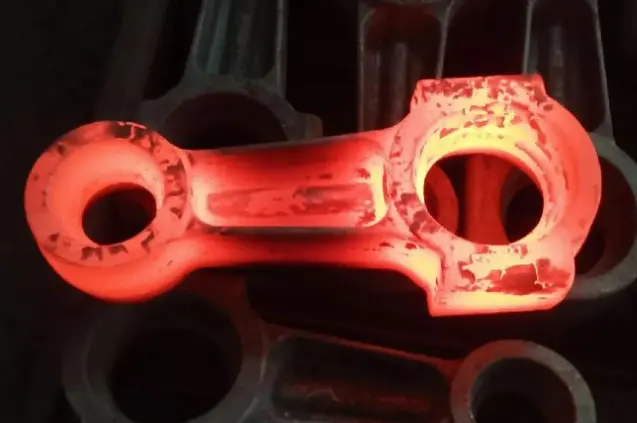
Most carbon and alloy steels are forged between 1100° and 1250°C, which is low enough to maintain the metal malleable enough to flow without severe grain formation. Maintaining the temperature within this range throughout the hot forging process decreases the force required to form the billet, while retaining the fine, regular grain structure that gives the completed part its strength and toughness.
Risks of Overheating and Underheating
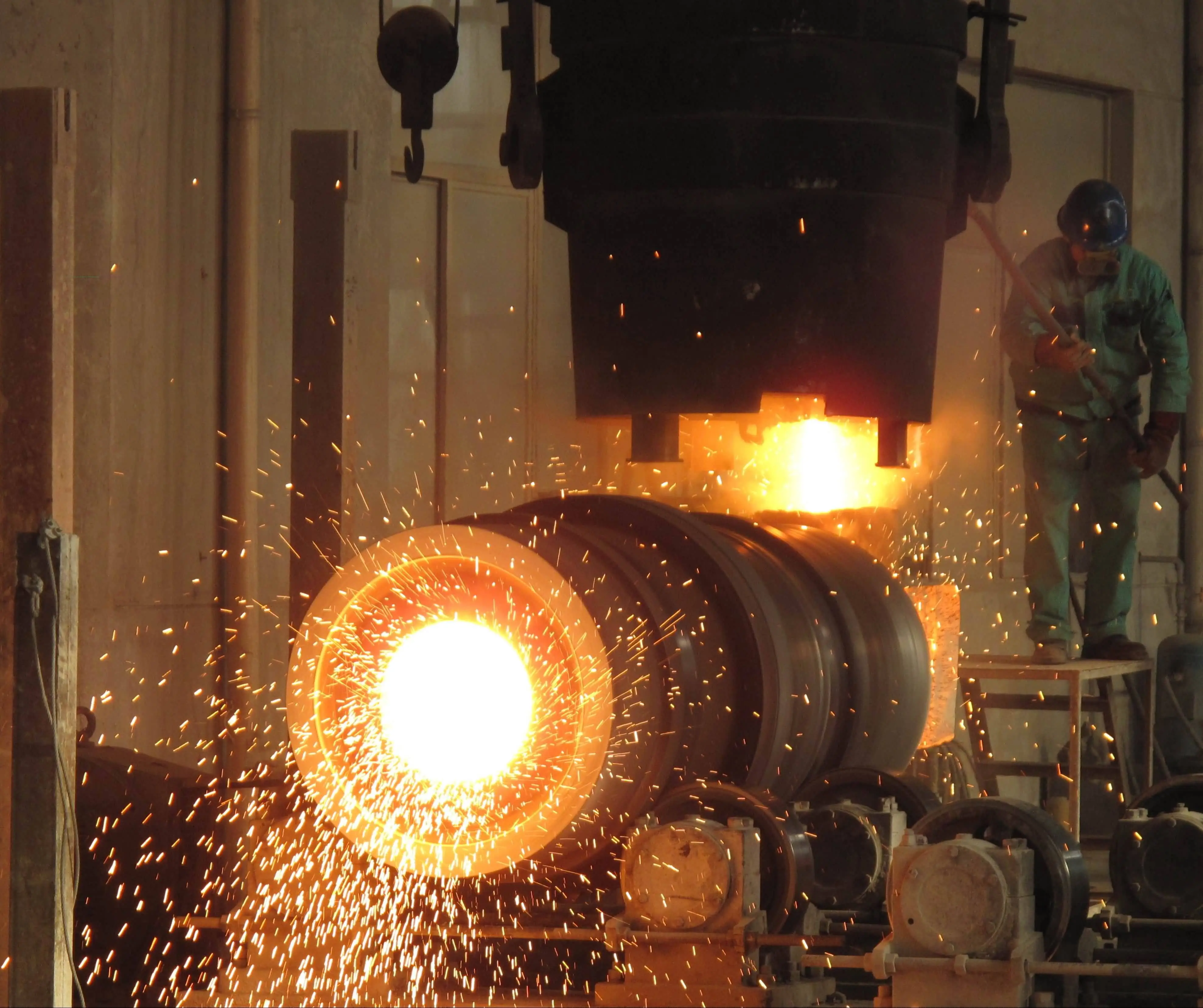
The material burns or over-oxidizes from the extra heat, weakening the grain boundaries and causing the surface to split under pressure. Conversely, underfilling increases flow stress and may lead to partial die filling or internal fractures. It is necessary to precisely manage and monitor the furnace temperature throughout the hot forging process to prevent both extremes and preserve consistent part quality.
Temperature Uniformity Across the Billet
Even if the average temperature is right, uneven heating throughout a billet may cause one part to bend more easily than another, resulting to warping or localised stress concentration. Induction heating systems use tight zone control to keep things even, so each area of the workpiece reacts predictably as it proceeds through each step of forming.
How Do Material Properties and Die Design Affect Forging Quality?
Alloy Composition and Hot Workability
The chemical makeup of a material influences its ability to be moulded at increased temperature. Alloys with balanced carbon, manganese, and trace elements often give superior hot workability with less chance of hot shortness or embrittlement. Choosing a grade that is appropriate to the service requirements of the part but yet amenable to elevated-temperature forming is a fundamental step in any successful hot forging process.
Die Geometry and Cavity Fill
The design affects the flow of the metal into corners, ribs, and thin portions during forming. Sudden changes in poorly built cavities might trap air, limit flow, or cause localised overloading that reduces die life. With flow simulation software, engineers may tweak the geometry before the steel is cut to guarantee full cavity fill and consistent part shape batch after batch.
Die Material and Preheating Practices
The forging die itself must be able to survive repeated thermal and mechanical cycling. Therefore, hardened tool steel is used, and the dies are preheated prior to manufacturing to decrease thermal shock and increase tool life. Proper die preheating also stabilises the temperature difference between the die and the workpiece, which allows a more predictable metal flow throughout the hot forging process.
Lubrication, Material Flow, and Cooling Rate in Hot Forging
Choosing the Right Lubricant
Lubrication decreases friction between the die and the workpiece, enabling improved metal flow and saving die surfaces from excessive wear. Common possibilities include graphite-based and water-soluble lubricants, chosen depending on forming speed, die material, and the particular needs of the item being made in the hot forging process.
Controlling Material Flow Direction
This guides the grain flow inside the natural contours of a part, so reinforcing it against the stresses it will be subjected to in service. A good die design ensures the metal flows along the load routes, not across them. For this reason, flow direction analysis is considered a fundamental quality aspect, not an afterthought during production planning.
Cooling Rate and Post-Forge Treatment
The cooling rate after the formation of a component is what determines the ultimate hardness, grain size, and residual stress levels. Uncontrolled or uneven cooling may lead to warping or microstructural irregularity; thus, many producers use controlled cooling or a subsequent heat treatment to lock in the mechanical qualities anticipated from a well-executed hot forging process.
What Causes Cracks, Laps, and Other Hot Forging Defects?
Surface Cracking from Thermal Stress
If the temperature varies too quickly or unevenly, thermal gradients arise and cause stress on the material's surface. This may lead to fine cracking. This is particularly true when a part is forged and subsequently quenched too rapidly, or when reheating cycles are poorly planned, both of which exert undue stress on the hot forging process.
Laps and Folds from Improper Flow
Laps are formed when metal rolls over itself instead of flowing smoothly. This is frequently caused by too much flash, worn dies, or an inappropriate die fill sequence. These folds generate weak areas that are not easy to notice visually but may greatly impair fatigue strength once the part is in use.
Internal Voids and Inclusions
Porosity or non-metallic inclusions present in the initial billet may form stress risers during forging and can appear as interior voids when loaded. Rigorous incoming material inspection and supplier quality control are the best approaches to detect these errors before they even get to the press.
Conclusion
The quality of the hot forging process is dependent on the interaction of temperature control, material selection, die design, lubrication, and cooling techniques. China Welong provides worldwide manufacturers with supplier development, buying oversight, and quality control services in the automotive, oil drilling, and aerospace sectors to assist them in managing these variables via its ISO 9001:2015 certified services. Welong has 20 years of experience servicing over 100 clients all around the globe. We are here to assist you in consistently producing defect-free forged components. Contact us immediately to enhance your manufacturing quality.
FAQ
Q1: What temperature range is typically used for hot forging steel?
A: Most carbon and alloy steels are forged between 1100°C and 1250°C, though the exact range depends on the specific alloy composition.
Q2: Why is the design so important to hot forging quality?
A: The geometry controls how metal flows into cavities, affecting fill completeness, grain flow direction, and overall dimensional accuracy of the finished part.
Q3: Can improper cooling after forging cause defects?
A: Yes, uneven or overly rapid cooling can introduce warping, residual stress, and inconsistent hardness across the finished component.
Q4: What is the difference between a lap and a crack in forging?
A: A lap is a fold where metal overlaps itself during flow, while a crack is a fracture caused by stress exceeding the material's capacity.
Q5: How can defects be minimized before production begins?
A: Rigorous incoming material inspection, validated die design, and controlled furnace temperature all help reduce the likelihood of defects during forming.
Partner With Welong for Reliable Hot Forging Solutions
Consistent forging quality starts with the right supply chain partner. China Welong brings two decades of international experience, ISO 9001:2015-certified quality control, and engineering support using AutoCAD, Pro-Engineering, and SolidWorks to help you avoid costly forging defects. Whether you are sourcing components for automotive, oil drilling, or aerospace applications, our team is ready to support your project from drawing to delivery. Contact us today at metal@welongpost.com and let Welong help power your next hot forging process with confidence and precision.
References
1. American Society for Metals (ASM International), Metals Handbook: Forming and Forging, Volume 14.
2. Kalpakjian, S., and Schmid, S. R., Manufacturing Engineering and Technology, Pearson Education.
3. Altan, T., Ngaile, G., and Shen, G., Cold and Hot Forging: Fundamentals and Applications, ASM International.
4. Lange, K., Handbook of Metal Forming, Society of Manufacturing Engineers.
5. Dieter, G. E., Mechanical Metallurgy, McGraw-Hill Education.
6. Byrer, T. G., Semiatin, S. L., and Vollmer, D. C., Forging Handbook, Forging Industry Association.

Share your inquiry, get the quotation accordingly!
China WELONG- Your Reliable Partner in Metal Solutions