Understanding Grain Flow in Forging to Maximize Part Strength
To make forged components as strong and useful as possible in a wide range of industrial settings, it is essential to understand how grains move during the forging process. Grain flow is the way of crystal alignment in metal that happens during the forging process. It has a direct effect on mechanical qualities like tensile strength, fatigue resistance, and general longevity. When metal is forged, the grain structure changes along the direction of the material flow. This makes patterns that look like fibers that make the structure stronger. For difficult uses in the aircraft, automobile, oil drilling, and medical device industries where component reliability cannot be sacrificed, high-quality forged components are important. This controlled grain alignment sets them apart from other manufacturing methods.
The Fundamentals of Grain Flow in Forging
Grain flow is the way that metal crystals are arranged in a direction that changes during the forging process. It has a big impact on the end part's mechanical features. The crystalline structure reorganizes when metal is heated and formed under pressure. This makes paths that are more aligned, which increases strength, hardness, and fatigue resistance. This happens because forging flattens and expands the metal grains in certain directions, filling in any gaps and making the structure thick and even.
How Forging Processes Shape Grain Structure?
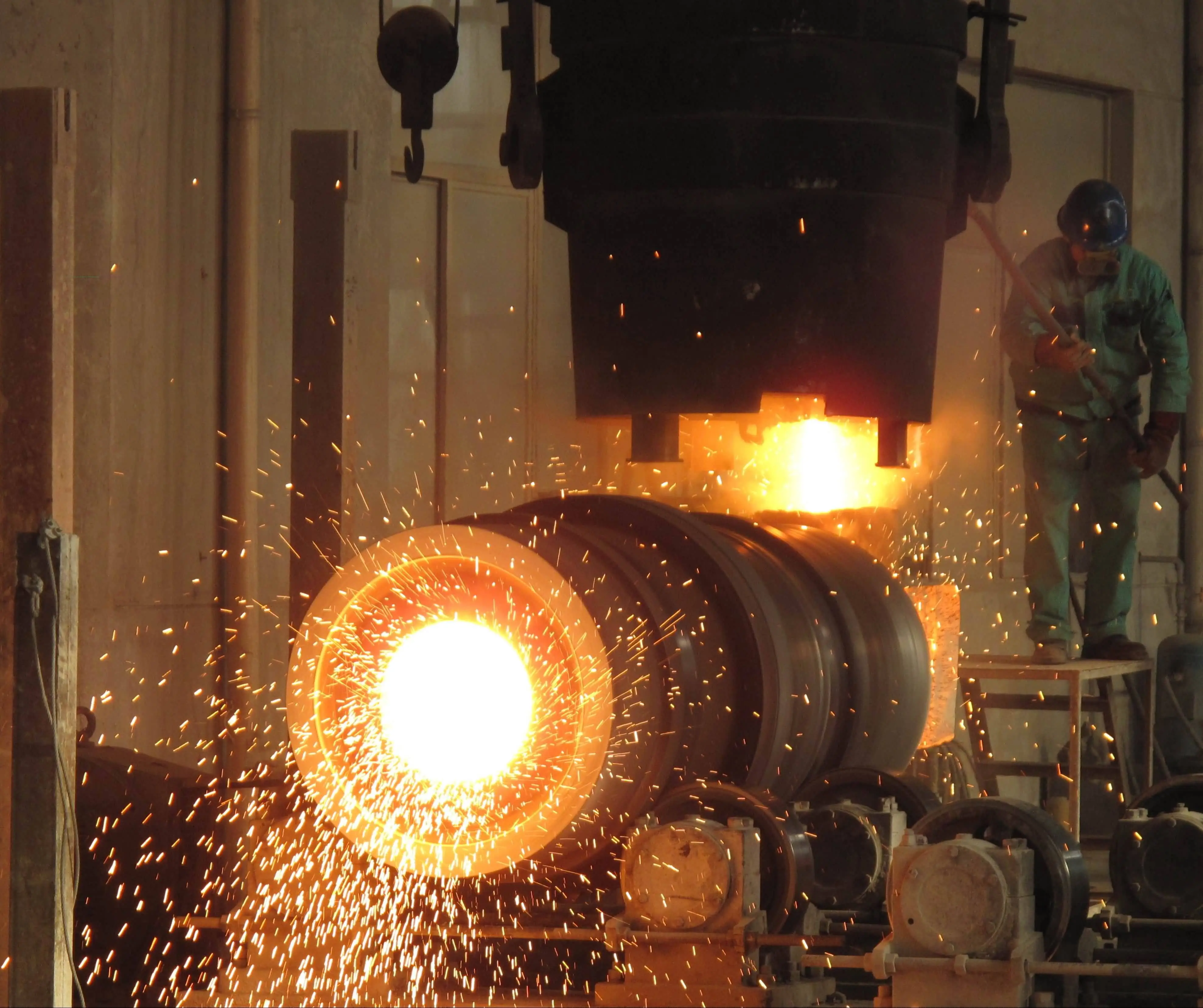
The forged components have a big effect on how the grains run and how well the part works afterward. Closed die forging, which is also called impression die forging, forces the metal to flow in specific designs by squeezing it into exactly shaped dies. This process makes very precise grain alignment that follows the shape of the part, which gives it the best strength distribution. Open die forging gives the flow of the metal more freedom, but trained workers are needed to carefully move the part around to get the grain patterns they want.
Grain flow features change depending on the casting method used. When high temperatures are used for hot forging, the grains can be rearranged a lot, and the flow patterns are great with little stress absorption. Cold forging keeps the finer grain structures, but it can make stress patterns that are more complicated and need to be carefully studied during the planning stages.
Material Considerations in Grain Flow Development
When metals are forged, the grain flow patterns are different for each metal. Forging works especially well on steel alloys because it creates strong directional grain patterns that make them stronger against failure and impacts. When carbon steel is hot forged, the grains become much smoother. But alloy steels with chromium, nickel, or molybdenum need certain temperature and pressure conditions to get the grains to line up perfectly.
Because of their lower forging temperatures and different crystalline structures, aluminum alloys are hard to control grain flow, especially. But if aluminum parts are made correctly, they have great strength-to-weight ratios and good grain patterns. Titanium alloys are often used in aircraft, but they need precise control over the forging settings to get the best grain flow patterns that are needed for important structural parts.
How Grain Flow Maximizes Part Strength: Problem-Solving Approach?
Managing grain flow correctly directly addresses several important issues in the production and performance of parts. When grain boundaries line up with the main stress directions in a part, the material is better able to stop cracks from spreading and wear out over time. This alignment makes natural reinforcement paths that spread loads more evenly than the randomly arranged grain structures that show up in cast or machined parts.
Common Grain Flow Defects and Their Solutions
Several things can get in the way of the best grain flow during shaping. If the die isn't designed well, it can make sharp turns or sudden changes in direction that break up the grain consistency and create stress concentration points and possible failure locations. During casting, changes in temperature can make the grain development uneven, and if the material is not handled properly, contaminants can get in and stop the grain boundaries from forming.
Optimizing the die shape is a key part of getting good grain flow patterns. Using gradual changes, the right draft angles, and planned material flow routes can help keep the grain continuity all the way through the part. Engineers can now use advanced modeling software to guess how grains will move before they build a die. This lets them make the best choices for both the tooling design and the forging settings.
Controlling the processing parameters makes sure that the grain develops the same way in all production runs. Monitoring temperature, applying pressure at different rates, and cooling methods all have an effect on the end grain structure. Modern forging shops use complex process control systems that keep the right conditions for grain flow growth and make sure that the quality is always the same.
Case Studies Demonstrating Strength Improvements
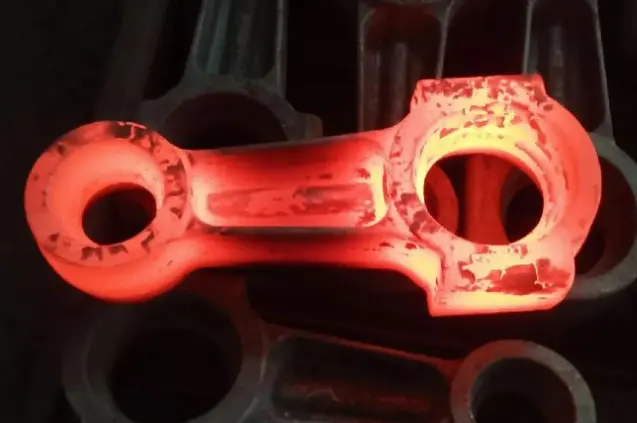
The production of connecting rods for cars is a great example of how optimizing grain flow can help. When bar stock is used to make traditional joining rods, the grains often run perpendicular to the main stress lines, which creates weak spots. Forged connecting rods with properly matched grain flow have a 40–60% longer wear life than machined options. They are also lighter because the material is distributed more evenly.
Landing gear parts used in spacecraft show how important grain flow is in safety-critical situations. Forged landing gear legs with the best grain alignment can handle the complicated stress patterns that come up during flight, such as collision, compression, and tension loads. The continuous grain structure creates multiple load lines that stop catastrophic failure modes, which makes a big difference in aircraft safety records.
Comparing Forged Components Grain Flow to Other Manufacturing Methods
Forging is very different from other ways of making things because of its benefits in grain flow. Casting, grinding, and additive manufacturing are all useful in their own ways, but only proper forging methods can give you a controlled grain structure. When procurement workers understand these differences, they can choose the best producing method based on performance needs and cost concerns.
Microstructural Comparisons Across Manufacturing Methods
Cast parts often have odd grain orientations and problems with porosity and inclusions that make the mechanical qualities less desirable. When you cast something, the solidification process makes branching structures that are weak where the grains meet. This is especially true when loads are applied perpendicular to these limits. Also, casting shrinking can lead to stress building up inside the material, which lowers its resistance to wear and tear and impacts.
When forged components are machined from worked stock, they may keep some of the good grain structure from the original material. However, the cutting process often cuts across grain boundaries, which can reveal weak spots. When material is removed during cutting, the work-hardening effects that make the part stronger are also lost. Machining improves the surface finish, but it breaks up the grain consistency near the sides of parts, which is where stress tends to build up.
By adding material one layer at a time, additive manufacturing methods make microstructures that are one of a kind. While these methods make it possible to make complicated shapes that wouldn't be possible with traditional methods, the grain structures that are made don't always have the continuity and symmetry that can be achieved through forging. The edges of layers can be places where stress builds up, and the constant heating and cooling that happens in additive processes can leave behind pressures that make parts less effective.
Performance and Economic Trade-offs
Different ways of making things have very different levels of material utilization efficiency. When compared to subtractive manufacturing methods, forging usually gets 85–95% of the material it uses and makes very little waste. When working with expensive alloy materials like those used in aircraft and medical devices, this economy becomes even more important. Modern forging can achieve near-net shapes, which means that less secondary cutting is needed while the favorable grain structure integrity is kept.
A cost-performance analysis shows that forging is better in high-stress situations, even though the starting prices of the tools might be higher. Forging dies are often worth the money because they give parts better mechanical qualities by maximizing grain flow. This is especially true for parts that need to last a long time or work in critical situations. Forging is also better for middle to large production runs because the prices of the tools can be spread out over many parts.
Best Practices for Procuring Forged Components with Optimal Grain Flow
Understanding technical standards and supplier skills is necessary for the successful purchase of high-quality forged components. Specification of grain flow needs is based on quality standards, and supplier review factors make sure that manufacturing partners have the skills needed to get the best results. When developing a buying plan, it's important to pay close attention to how to balance performance needs with cost concerns.
Quality Standards and Certification Requirements
ISO 9001:2015 approval sets minimum standards for quality management for forging providers, ensuring that processes are controlled in a structured way and that they are always getting better. But guidelines for a certain business give more specific advice on how much grain flow is needed. ASTM standards, like A788, describe how to test the grain flow of steel forgings, while AMS standards spell out the requirements for aerospace-grade materials and include in-depth metal tests.
Quality control methods need to cover both the factors of the process and the final review of the parts. Ultrasonic examination and magnetic particle inspection are two non-destructive testing methods that can find problems with grain flow without hurting finished parts. The grain structure can be confirmed through metallographic study and mechanical property testing on representative examples that are subjected to destructive testing.
The documentation needs to list the patterns of grain flow, the mechanical property goals, and the testing standards. Making technical standards clear helps sellers understand what is expected of them and come up with the right ways to make the goods. Regular source checks make sure that quality standards for grain flow are still being met and give people who want to work together to improve the process a chance to do so.
Supplier Evaluation and Partnership Development
To judge a supplier's grain flow knowledge, you need to look at both their professional skills and their manufacturing experience. In advanced forging facilities, metallurgical engineers are usually hired because they know how process factors affect the growth of grain structure. Grain flow quality is directly affected by the powers of the equipment, such as the size of the press, the heating systems, and how well the temperature is controlled.
OEM knowledge in related businesses gives useful information about what suppliers can do. Suppliers to the aerospace and car industries must show that they understand the strict quality standards and have the process control systems needed to achieve regular grain flow. Medical equipment suppliers need to know more about safe materials and follow FDA rules. On the other hand, oil and gas suppliers need to know how to deal with the unique problems that come up in harsh environments and corrosive environments.
The growth of partnerships is based on working together to improve component performance. Suppliers who know a lot about design for manufacturing can give useful information during the development stages of a component by offering changes that improve grain flow patterns while keeping the usefulness. Long-term partnerships allow for ongoing efforts to improve things, which are good for both parties because they lower costs and raise performance.
Future Trends and Performance Optimization in Grain Flow Forging
New technologies keep making it easier to control the flow of grains while also cutting down on production costs and wait times. Digital transformation projects, such as implementing Industry 4.0, give us a new level of insight into forging processes, which lets us adjust grain flow factors in real time. These changes put forward-thinking businesses in a good situation to take advantage of new possibilities while keeping their competitive edges.
Advanced Process Control and Monitoring
Finite element analysis is used by automated die design tools to predict grain flow patterns and find the best tooling shape before production starts. These systems look at the features of the material, how the temperature is distributed, and how it deforms to suggest changes to the die that will make the grains line up better. Machine learning algorithms look at past production data to find links between process factors and grain flow quality. This lets them guess how to make the best conditions for manufacturing.
Digital process tracking tells you about forging factors that affect grain development in real time. During the forming cycle, advanced sensor networks keep track of changes in temperature, pressure, and the rate at which material flows. Deviation recognition systems let workers know when conditions may lower the quality of the grain flow, so they can fix the problem right away, before any bad parts are made.
Applications that use forged components put together data from process tracking and results from quality inspections to find patterns and possible problems before they affect production. These systems help makers find the best process windows to get regular grain flow while lowering the amount of waste and work that needs to be redone. Integration with corporate resource planning tools lets schedules be changed ahead of time based on what the quality results are expected to be.
Emerging Materials and Applications
Next-generation aircraft materials, such as advanced titanium alloys and nickel-based superalloys, need specific ways to control the flow of grains. When these materials are used in places with high temperatures and a lot of stress, the stability of the grain structure directly affects how long the parts last. The goal of developing a forging method for these materials is to get uniform grain refinement while keeping the high-temperature properties that are needed for jet engines and space research.
Aluminum and magnesium forged components with improved grain flow patterns are in high demand due to automotive lightweighting efforts. Lightweight forged components that keep the structure strong while lowering the overall car mass are especially useful for electric vehicles. New aluminum alloys that are easier to shape allow for complicated part shapes with good grain flow patterns that were only possible in steel parts before.
Forged components made of safe materials, such as titanium alloys and special stainless steels, are needed more and more in medical device uses. The wear and corrosion resistance of these parts must be very high, and they must also meet the exact dimensional requirements needed for medical uses. Optimizing grain flow is very important for internal devices because a broken part could be life-threatening.
Conclusion
Understanding and improving grain flow in forging is one of the most important things that can be done to make parts stronger and more reliable in a wide range of industry settings. Forged components have better dynamic qualities than parts made in other ways because the metal grains are aligned in the right direction, thanks to proper forging techniques. For adoption to go smoothly, procurement workers, engineering teams, and skilled suppliers with the right knowledge to create the best grain flow patterns must work together. As technology keeps improving process control and adding more material choices, businesses that focus on optimizing grain flow will stay ahead of the competition by making parts work better and spending less over their entire life.
FAQ
How does grain flow affect fatigue life in forged components?
Grain flow greatly extends wear life by making continuous tracks through the material that stop cracks from starting and spreading. Random grain orientations don't spread cyclic loads as well as properly aligned grains do. This is why machined or cast options often have 200–400% lower fatigue resistance. The continuous grain borders naturally stop cracks from growing, which extends the service life of the part in situations where it is loaded and unloaded many times.
What are the key differences between closed die and open die forging in grain structure outcomes?
Closed die forging is better at controlling grain flow because it precisely confines the material within shaped dies. This makes it possible to get very reliable grain patterns that match the structure of the component. Open die forging gives you more options for making big parts, but you need to be skilled to make sure the grains line up perfectly by carefully moving the block. When it comes to high-volume production, closed die methods tend to make more uniform grain flow patterns, while open die methods work best for special parts and prototype development.
Can grain flow optimization reduce overall component costs?
Even though it might cost more to make at first, optimizing grain flow often lowers the total cost of ownership by making parts last longer and be more reliable. When grains are aligned correctly, they have better mechanical qualities. This means that less material is needed in many situations while still meeting performance standards. Improved fatigue resistance also lowers the need for maintenance and replacements, which leads to lower life-cycle costs, especially in important uses where failure of a component has major effects.
Partner with Welong for Superior Forged Components Manufacturing Excellence
Welong has been making unique metal parts for 20 years, so they can make sure that the grain flow is just right for your important uses. Forged components that meet the strict needs of the aircraft, automotive, oil drilling, and medical device industries are produced by our ISO 9001:2015 certified methods and experienced engineering team. The things we do best are turning your sketches and samples into high-performance parts with great grain flow. Get in touch with our team at metal@welongpost.com to talk about your needs for a forged components seller and find out how our proven skills can help your product work better and be more reliable.
References
1. Altan, T., & Tekkaya, A. E. (2012). Sheet Metal Forming: Processes and Applications. ASM International.
2. Dieter, G. E., & Bacon, D. J. (1988). Mechanical Metallurgy: SI Metric Edition. McGraw-Hill Education.
3. Groover, M. P. (2020). Fundamentals of Modern Manufacturing: Materials, Processes, and Systems. John Wiley & Sons.
4. Hosford, W. F., & Caddell, R. M. (2011). Metal Forming: Mechanics and Metallurgy. Cambridge University Press.
5. Lange, K., Cser, L., Geiger, M., & Kals, J. A. G. (1992). Tool Life and Tool Quality in Bulk Metal Forming. CIRP Annals - Manufacturing Technology.
6. Saha, P. K. (2000). Aluminum Extrusion Technology. ASM International Handbook Committee.

Share your inquiry, get the quotation accordingly!
China WELONG- Your Reliable Partner in Metal Solutions