Silica Sol vs Water Glass Casting: Choosing the Right Process
When deciding between silica sol and water glass casting for your manufacturing needs, understanding the fundamental differences becomes crucial for optimal results. Water glass casting, also known as sodium silicate investment casting, offers cost-effective solutions for larger components with complex geometries, making it particularly valuable for industries requiring robust, precise parts. While silica sol provides superior surface finish, water glass casting delivers exceptional dimensional accuracy at competitive pricing, especially for steel and iron applications. This comprehensive guide examines both processes to help procurement managers and engineering professionals make informed decisions that align with their specific project requirements, quality standards, and budget constraints.
Understanding Water Glass Casting and Silica Sol Casting
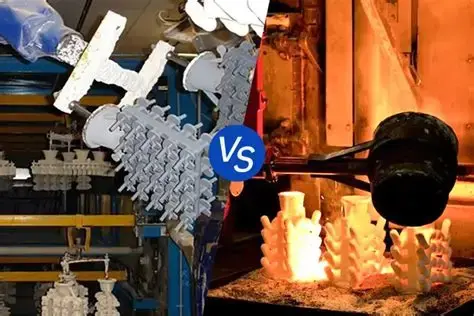
Investment casting includes two main techniques that have changed the way precision production is done in many fields. While these methods are based on some of the same basic ideas, they are very different in the materials they use and how well they work.
Chemical and Process Fundamentals
Sodium silicate is the main ingredient in water glass casting. It makes strong clay shells through a method of coating them many times. This technology, originally developed in Russia and later refined in China, has become the dominant investment casting method in Asian manufacturing facilities. First, wax designs are made, and then the pieces are repeatedly dipped in clay slurries that contain sodium silicate binders. Colloidal silica is used as a binder in silica sol casting, which makes surfaces that are very smooth and accurate in terms of size. During the shell-building process, the colloidal silica particles strengthen the bonds between molecules. This makes the mold more stable and reduces surface flaws. When compared to older sodium silicate methods, this new method needs more complex ways to control temperature and handle the material.
Material Properties and Applications
The bond strength between these two processes has a big effect on how well they work in different situations. Larger casts, usually between 0.5 and 50 kilos, work very well with sodium silicate binders. This makes them perfect for making parts for cars, farm equipment, and industrial equipment housings. The process works with different types of steel and cast iron metals and keeps costs low. When you need a very smooth surface and fine details to be reproduced, colloidal silica binders work great. Silica sol methods are good for making accurate instruments, medical device housings, and aerospace parts because they keep their shape better and need less post-processing.
Detailed Comparison: Water Glass Casting vs Silica Sol Casting
To make the best decisions about which castings to use, manufacturing pros need to do a full study of the process's capabilities. This review looks at how well the product is made, how well it works with other materials, how much it costs, and how it affects the earth.
Process Efficiency and Cycle Times
The production cycles for these methods are very different, which has a direct effect on setting manufacturing plans and capacity. For sodium silicate casting, it usually takes three to five days from the time the plan is made until the casting is finished. The shell building process takes eight to twelve hours. The hardening process happens at room temperature with the help of CO2, so there is no need for energy-intensive heating during the initial shell formation. Silica sol making makes cycle times longer to 5–7 days because of the precise temperature control needed for drying and shell preparation. Each layer of clay needs a different level of humidity and temperature, which means that the climate needs to be controlled in a complicated way that makes operations more difficult but results in a better surface.
Cost Analysis and Material Economics
The cost of the raw materials is a big part of choosing a casting method, especially when a lot of them need to be made. Sodium silicate bonds are about 40–60% cheaper than colloidal silica options. This makes water glass casting a good choice for situations where cost is important. The prices of shell materials like refractory flour and backup sand stay the same for both methods. Investing in equipment is very different between methods. For water glass making, normal foundry tools are used, and not many special tools are needed. For processing silica sol, you need controlled atmosphere chambers, precise temperature tracking systems, and high-tech drying tools, all of which raise the cost of capital by 25 to 35 percent.
Environmental and Safety Considerations
Environmental safety is becoming more and more important for factories around the world. During normal activities, water glass casting makes very little toxic trash and wax materials that can be recycled. When metal is poured at high temperatures, the sodium silicate glue naturally breaks down into silica sand that can be used again. Silica sol processing is better for the earth because it releases fewer chemicals and uses less energy when making the shell. The colloidal silica binder lowers the amount of particulate matter in the air, which improves the quality of the air in the workplace and lowers the need for breathing protection for casting workers.
Selecting the Right Casting Method for Your Project
To choose the best strategic casting method, you need to carefully look at the factors and practical limits of the project. Manufacturing engineers have to find a balance between the need for quality and the time and money constraints of production. They also have to make sure that the supplier's skills match their technical requirements.
Project Parameter Assessment
Production rate has a big effect on how well a casting method works and how much it costs to run. Cost-effective water glass casting happens when more than 50 pieces are made each year. Above 500 pieces per year, economies of scale get even better. The process can handle everything from making a sample to making a lot of them without having to make big changes to the tools. Process selection objectives are often set by the need for dimensional tolerance. Parts that need tolerances tighter than ±0.3mm usually work better with silica sol processing, while parts that can handle tolerances of ±0.5mm can work well with sodium silicate methods. If the surface finish needs to be below 3.2 Ra, silica sol methods or other secondary finishing processes are usually needed.
Industry-Specific Requirements
When strength and longevity are more important than surface finish, water glass casting is often the best choice for engine parts, transmission housings, and chassis parts used in cars. The process works with different types of steel, like carbon steels, alloy steels, and stainless steel mixtures that are often used to make cars. Because of strict quality standards and complicated shapes, aerospace parts often need to be made in silica sol. Critical flight parts need better physical stability and lower porosity that colloidal silica methods can provide. Less inspection is needed, and the reliability performance is better, so the higher prices of the materials are justifiable.
Supplier Evaluation Criteria
When choosing a foundry, you have to look at their technical skills, quality standards, and how reliable their supply chain is. ISO 9001:2015 certification is a basic way to make sure of quality, while AS9100 or TS16949 standards show that a company has specific knowledge in aircraft or cars. Supplier sites should show consistent process control by keeping an eye on the process statistically and writing down quality steps. Lead times and transportation costs are greatly affected by where things are located. Chinese foundries make most of the water glass castings because they have low prices and a lot of experience. But supply chain risk management might choose local providers even if they charge more, especially for important parts or quick prototype development.
Practical Considerations and Safety Tips for Water Glass Casting
To be an operational success in sodium silicate casting, you need to pay close attention to the process details and safety rules that make sure the quality results are always the same. Manufacturing teams need to know where the key control points are and use the right risk-mitigation methods.
Process Control and Quality Management
Shell making is the most important part of the water glass casting process. Each ceramic layer needs to be the right thickness, with main coats being 1.5 to 2 mm thick and backup layers being 3 to 5 mm thick. If the shell is too thin, metal entry flaws happen, and if it's too thick, material costs go up and drying times get longer. Controlling the temperature while dewaxing keeps the shell from breaking and makes sure that all the wax is removed. Temperatures for dewaxing should rise slowly from 150°C to 200°C over two to four hours. After that, the shell should be heated to 950°C to 1000°C before the metal is poured. Thermal shock and shell failure are caused by sudden changes in temperature.
Common Defects and Prevention Strategies
Surface flaws in water glass castings are usually caused by not properly preparing the shell or not controlling the process well enough. The main types of defects and how to avoid them are listed below:
- Surface roughness happens when the thickness of the ceramic slurry is higher than what is ideal or when the shell dries too quickly. These surface flaws can be avoided by keeping the slurry viscosity between 18 and 22 seconds on a Ford cup and keeping the drying humidity below 60%.
- Dimensional variations happen when the shell thickness isn't uniform or when the pattern quality isn't good enough. Pattern checking procedures and consistent dipping techniques are used to make sure that the dimensions stay the same from one production batch to the next.
- Metal penetration defects happen when the shell isn't dense enough or when the metal is poured too soon. Most piercing problems can be solved by letting the shell cure completely and checking its stability visually.
These prevention strategies cut down on rejections by a large amount and improve the quality of castings overall when used regularly across all production processes.
Safety Protocols and Workplace Practices
When working with sodium silicate chemicals, certain safety steps need to be taken to protect people and keep regulations in line. People who work with strong sodium silicate solutions should wear the right safety gear, like chemical-resistant gloves, safety glasses, and masks to protect their lungs. During shell building and drying, ventilation systems must make sure that enough air flows through the space. Chemical vapors and ceramic dust particles are removed by local exhaust airflow, which keeps the air quality in the workplace below the limits for working exposure. Monitoring the air quality on a regular basis makes sure that safety rules are still being followed.
Procurement Guidance: Sourcing Quality Water Glass Casting Materials and Equipment
Getting casting materials and tools smartly has a direct effect on the quality of the work and how efficiently it is done. To get the most out of their casting processes, procurement workers need to look at what suppliers can do, what materials they offer, and how likely they are to be a long-term partner.
Material Sourcing Strategies
The quality of sodium silicate changes a lot between sources, which affects the strength of the shell and the quality of the casting surface. The SiO2/Na2O ratios in good sodium silicate should stay between 3.1 and 3.4, and the viscosity should be the same from one production lot to the next. Protocols for checking materials and proof of quality approval should be part of a supplier's qualification. Specifications must be carefully followed for refractory materials like zircon flour, alumina, and silica sand to have the best shell qualities. Premium zircon flour with particles that are usually between 100 and 150 mesh gives a great finish to the surface while still letting enough shell pass through. Setting up preferred supplier relationships with certified refractory makers guarantees stable quality of materials and on-time deliveries.
Equipment Selection and Capital Investment
The choice of tools in a foundry has a big effect on how well it works and how well it makes products. Modern shell building systems use controlled drying rooms and automatic dipping systems that make the shells more consistent while requiring less work. Depending on how much you need to make, the average investment costs between $150,000 and $500,000. For water glass casting, the melting equipment needs to be able to handle the special alloy mixtures needed. Compared to standard furnace designs, induction melting devices let you precisely control the temperature and lower oxidation. Electric systems are better for the earth because they lower pollution and use energy more efficiently.
Long-term Partnership Development
Managing supplier relationships is important for keeping casting quality uniform and keeping an eye on supply chain risks. When you want to work with Chinese foundries, you need to carefully look at their quality systems, output skills, and ways of communicating. Regular audits of the building and checks on the quality of the work make sure that standards are always being followed. When negotiating a contract, the parties should talk about quality standards, delivery requirements, and success measures that are in line with the business's goals. Long-term contracts often save money and give you priority access to production capacity during times of high demand. These relationships help with strategic planning and make it possible for people to work together to make things better, which is good for everyone.
Conclusion
Choosing between silica sol and water glass casting relies on how well quality needs, cost, and production goals are met. The benefits of water glass casting are strong for bigger parts that need to be built well at a low cost, especially in industrial and automobile settings. Modern methods make the process very accurate in terms of dimensions and improve the quality of the surface while keeping the cost low for middle to high-volume production. For aerospace and medical uses where quality supports higher prices, silica sol casting gives a smoother surface and more accurate results. To choose the right casting, you need to carefully look at the project requirements, the supplier's skills, and the long-term operating strategies that will help you get the best results from the manufacturing process and the supply chain.
FAQ
What are the main advantages of water glass casting over silica sol casting?
When compared to silica sol methods, water glass casting is much cheaper, with material costs being 40–60% lower on average. The process works better with bigger castings and has faster production runs for uses that need a lot of them. Water glass casting also doesn't need as many specialized tools and works well with a wide range of steel and iron metals that are frequently used in commercial settings.
Which metals work best with water glass casting processes?
Sodium silicate casting works really well with carbon steels, metal steels, and stainless steel types. It has been shown that cast iron metals work well with water glass methods as well. The method works well with melting points up to 1650°C, so it can be used with most iron alloys that are used to make cars, farm equipment, and industrial machinery.
How do I ensure safe handling of water glass chemicals in foundry operations?
To properly handle chemicals, you need to wear protective gear like gloves that don't react with chemicals, safety glasses, and the right breathing protection. Keep your ventilation systems in good shape and check the air quality regularly. Sodium silicate solutions should be kept in specific areas with the right control systems. There should also be emergency eyewash stations close to areas where the solutions will be handled. Regular safety training makes sure that employees know how to do things right and what to do in a situation.
Partner with Welong for Superior Water Glass Casting Solutions
Welong brings over 20 years of expertise in precision metal casting and supply chain management to manufacturers across automotive, aerospace, and industrial sectors. Our ISO 9001:2015 certified processes ensure consistent quality while our engineering team provides comprehensive design support using AutoCAD, Pro-Engineering, and SolidWorks capabilities. As a trusted water glass casting supplier, we deliver customized solutions from drawings and samples, enabling cost-effective manufacturing with reliable delivery schedules. Contact our team at metal@welongpost.com to discuss your casting requirements and discover how our proven China supply chain expertise can optimize your manufacturing operations.
References
1. Campbell, John. "Complete Casting Handbook: Metal Casting Processes, Techniques and Design." Butterworth-Heinemann, 2015.
2. Brown, James R. "Foseco Foundryman's Handbook: Facts, Figures and Formulae." Elsevier Science, 2018.
3. Beeley, Peter R. "Foundry Technology." Butterworth-Heinemann, 2001.
4. ASM International. "ASM Handbook Volume 15: Investment Casting." ASM International Materials Park, 2008.
5. Monroe, Richard W. "Investment Casting Handbook." Investment Casting Institute, 2019.
6. Stefanescu, Doru M. "Science and Engineering of Casting Solidification." Springer International Publishing, 2015.

Share your inquiry, get the quotation accordingly!
China WELONG- Your Reliable Partner in Metal Solutions