How Precision Die Forging Improves Metal Strength and Durability?
Precision die forging is a sophisticated manufacturing process that has revolutionized the production of high-strength, durable metal components.
Unlike basic forming methods that smooth the grain flow, this method improves the internal structure of metals, increases the density of the material and decreases the probable weaknesses from internal flaws.
Die forging is a suitable process for companies that demand reliable parts in severe conditions of loads, repeated stress or extreme conditions of operation to produce more durable and stronger components. Forged components find widespread use in aerospace, automotive, energy and heavy equipment industries for greater fatigue resistance, structural consistency and length of service.
Understanding how die forging improves metal performance will allow engineers and consumers to make better manufacturing process choices for critical applications.
How Does Die Forging Improve Metal Strength?
Optimized Grain Flow for Better Load Resistance
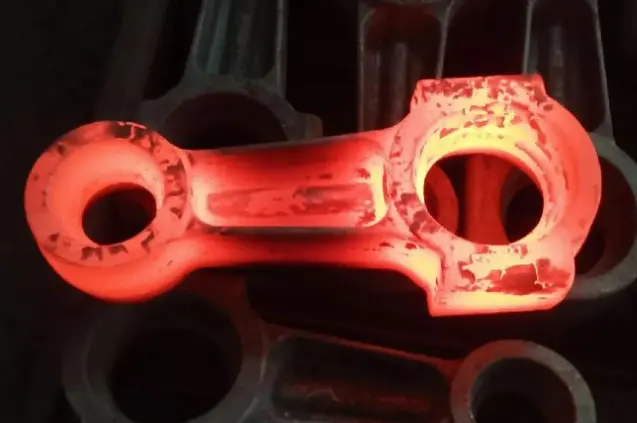
One big advantage of die forging is that it can improve the interior grain structure of metal parts. The material is controlledly deformed during forging such that the grain flow follows the shape of the part.
This continuous grain orientation allows components to better withstand applied forces, as the internal structure corresponds to the expected direction of stress. Forged items often have better fatigue resistance and impact strength than methods that cut across the original grain structure.
In operation, components like shafts, gears and connecting rods are subjected to repeated mechanical loading. Die forging procedures, when developed properly, help these parts preserve structural integrity over lengthy service periods.
Reduced Internal Defects and Improved Material Density
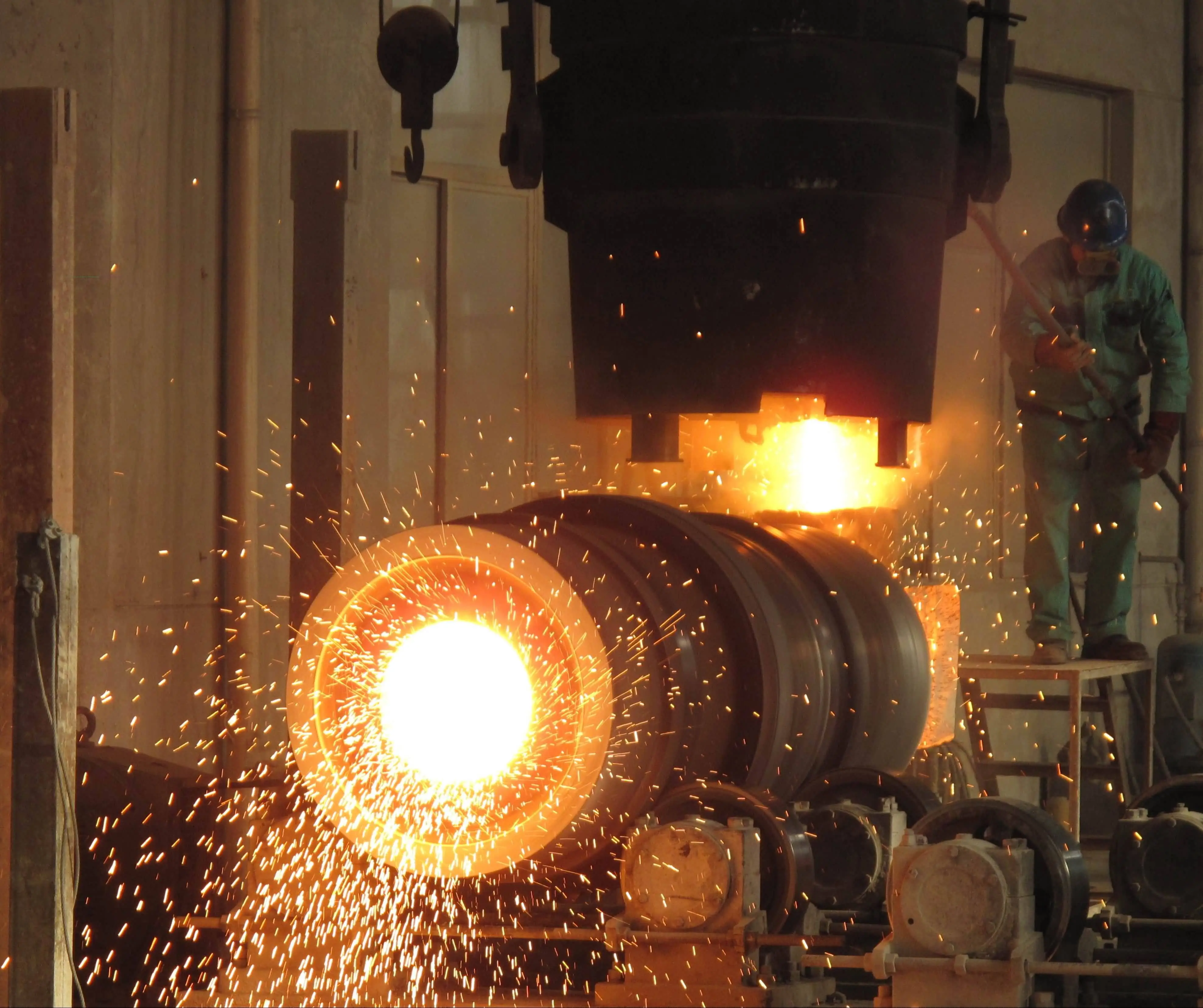
The quality of the metal is highly dependent on internal uniformity. High pressure is used to compress the material in the die forging process, and it also helps to fill internal voids that may be present in the original billet.
The enhanced density decreases the places where cracks can start and helps to generate more homogeneous mechanical characteristics throughout the part. However, the final performance also depends on the quality of the raw material, the management of the forging temperature, the heat treatment and the inspection procedures, among others.
Manufacturers frequently use die forging coupled with testing procedures such as hardness testing, tensile testing, dimensional inspection, and non-destructive testing to confirm the reliability of components in critical applications.
Controlled Microstructure and Enhanced Mechanical Performance
Die forging enables manufacturers to regulate the circumstances of deformation and optimize the final microstructure of metal parts. The qualities such as strength, toughness and wear resistance can be improved by proper management of forging temperature, deformation sequence and cooling procedures.
In case of alloy steels and other engineering materials, controlled forging can help to obtain more consistent distribution of alloying elements and enhance the balance between hardness and ductility.
This makes die forging useful for components where both strength and durability over the long term are required.
Why Choose Die Forging Over Other Manufacturing Methods?
Die Forging Compared With Casting
The casting process is useful for generating complex shapes. Cast parts can have problems of porosity, uneven grain structure, or particular points of weakness.
Die forging increases material integrity by exerting mechanical pressure that refines the structure and develops continuous grain flow. Forged parts are therefore typically used for applications involving high loads, vibration and repeated stress.
Aerospace brackets, automotive suspension components and industrial shafts frequently call for the fatigue resistance and reliability that die forging can offer.
However, casting is still a good choice for certain applications when complex geometry and cheaper tooling costs are the most important objectives.
Die Forging Compared With Machining
Machining removes material from a work item to obtain great dimensional accuracy. However, material removal may disturb the inherent grain structure of the original metal.
The die forging shapes the component closer to final form and preserves good grain flow through the part. This can increase resistance to fatigue and mechanical stress, particularly in the load-bearing sections.
Die forging to make a robust near-net-shape part and machining to get the exact final dimensions are both procedures used by many businesses.
This method offers a trade-off between the structural performance and manufacturing accuracy.
Die Forging Compared With Powder Metallurgy
Powder metallurgy is a convenient technique for creating small, intricate parts with good material efficiency. However, the constraints of conventional powder metallurgy methods can be the density and fatigue performance.
Die forging provides fully consolidated metal parts with fewer internal gaps and higher grain continuity. These properties make forged components appropriate for challenging situations, taking into account mechanical reliability.
Die forging is generally the choice when maximum load capacity and durability are required for heavy-duty applications such as industrial machinery and energy equipment.
Where Are Die-Forged Components Commonly Used?
Aerospace Components
Die forging is used in the aerospace industry for parts that need to be strong but not too heavy.
Components of an aircraft such as landing gear, engine parts and structural fittings are required to tolerate vibration, temperature variations and multiple loading cycles. Forged components are more reliable in these harsh conditions since they have a better grain structure.
Manufacturers also rely on rigorous inspection procedures to verify that aircraft-forged parts fulfill the needed quality and safety standards.
Automotive Parts
In the automotive industry, die forging is often utilized for parts exposed to constant mechanical stress.
Typical uses are:
- Crank shafts
- Connecting Rods.
- Steering parts
- Transmission parts
- Drive shafts
These components are subjected to repeated stresses during the service life of the vehicle, and hence, they have to possess strong fatigue resistance.
Die forging is crucial in the manufacture of lightweight and durable components like motor shafts and structural components as electric and hybrid vehicles grow in popularity.
Heavy Machinery and Industrial Equipment
Heavy machinery works in an environment where component failure can translate into expensive downtime. The die forging process enables producers to generate strong products capable of withstanding high mechanical loads.
Applications include:
- Hydraulic Parts
- INDUSTRIAL GEARBOXES
- Parts for Mining Equipment
- Parts of oil and gas
- Big shafts and structural parts
These industries benefit from increased wear resistance, greater fatigue performance and extended service intervals.
What Should Buyers Consider When Selecting a Die Forging Supplier?
Choosing a forging partner is critical to ensuring quality and minimizing production risk. There are various aspects to consider before choosing a provider, such as:
- Experience with similar forged parts
- Material capabilities: 7.
- Die design and manufacturing know-how
- Ability to heat treat
- Quality control systems
- Requirements for certification
A supplier that combines forging, machining and testing may have better control of the overall manufacturing process.
With more than 20 years’ industry experience, Shaanxi Welong Int’l Supply Chain Mgt Co., Ltd. offers customized metal production solutions. The company offers forging, casting and machining services for a range of materials such as steel, alloy steel, stainless steel, aluminum, and superalloys.
Welong provides customers with tailored components, quality control processes and worldwide supply chain management solutions with ISO 9001:2015 and API-7-1 certifications.
Conclusion
Die forging is a time-honored manufacturing method to improve the strength and endurance of metals by optimizing the grain flow, increasing the material density and controlling the microstructure. Forged parts have less internal weakness and improved mechanical properties, making them capable of meeting the tough demands of fields including aerospace, automotive, and heavy equipment.
Die forging has major advantages over casting, machining and conventional powder metallurgy for applications requiring high fatigue resistance, structural reliability and long service life.
As manufacturers continue to look for stronger and more efficient metal components, the key to delivering consistent performance is finding an experienced die forging supplier with modern manufacturing capabilities and rigorous quality control.For more information or to discuss your precision die forging needs, contact them at metal@welongpost.com.
References
1. Smith, J. R., & Johnson, A. B. (2019). Advancements in Precision Die Forging Techniques for Enhanced Metal Properties. Journal of Materials Engineering and Performance, 28(4), 2145-2160.
2. Thompson, E. K., et al. (2020). Comparative Analysis of Precision Die Forging and Traditional Manufacturing Methods in Aerospace Applications. International Journal of Aerospace Engineering, 2020, 1-15.
3. Davis, M. L., & Wilson, R. T. (2018). Microstructural Evolution in Precision Die Forged Alloys: A Comprehensive Review. Materials Science and Engineering: A, 735, 318-337.
4. Chen, X., & Zhang, Y. (2021). Precision Die Forging: Optimizing Process Parameters for Improved Strength and Durability. Journal of Manufacturing Processes, 62, 1123-1138.
5. Anderson, K. P., et al. (2022). The Impact of Precision Die Forging on the Automotive Industry: A Case Study in Component Performance. SAE International Journal of Materials and Manufacturing, 15(1), 5-18.
6. Lee, S. H., & Brown, T. G. (2020). Innovations in Precision Die Forging for Heavy Machinery Applications: Enhancing Durability and Efficiency. Journal of Heavy Engineering Research, 44(3), 287-302.

Share your inquiry, get the quotation accordingly!
China WELONG- Your Reliable Partner in Metal Solutions