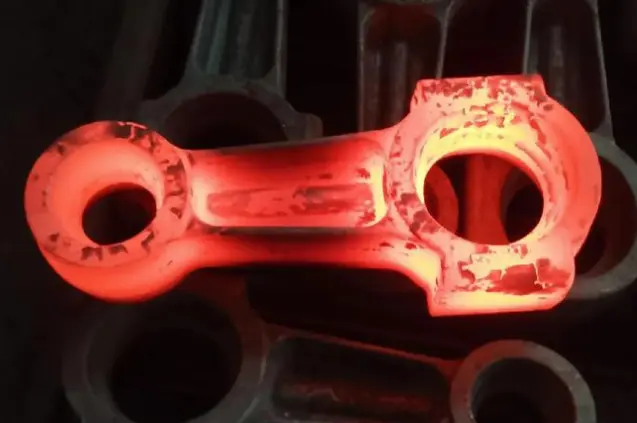
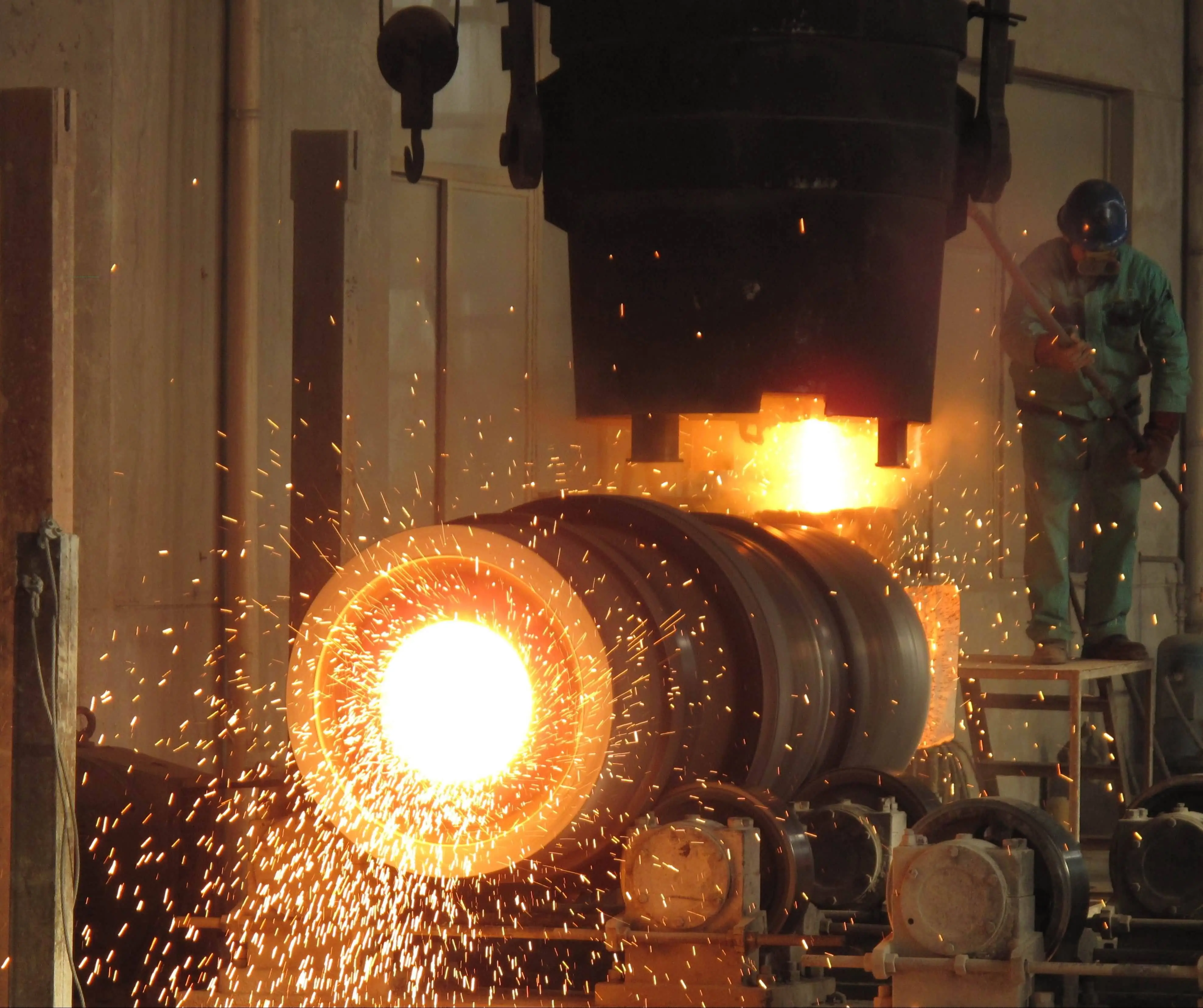
How do I choose a reliable hot forging parts supplier?
Selecting the correct source of hot forging parts is more than just comparing quotes. For OEMs, machinery manufacturers, engineering contractors, and industrial procurement teams, the supplier selected at the beginning of a project can impact dimensional consistency, mechanical performance, production timelines, and total manufacturing cost.
A good forging provider will do a lot more than take a drawing and make a product. The supplier must have knowledge in material selection, forging techniques, die design, heat treatment, machining, inspection, and production traceability. Equally vital is that the company has enough capacity to handle development orders and continuing production.
That’s why supplier certification has to be based on production capabilities and verifiable performance and not just price. A low first quotation is worth little if variable quality, late shipping, or repeated production corrections add to the cost later.
For enterprises that are looking for a supplier of forged components, the following considerations can help to choose a supplier who is technically capable, commercially dependable, and ideal for long-term cooperation.
Which Capabilities Should a Reliable Forging Supplier Have?
Start With the Supplier’s Quality Management System
Quality certification is a good basis for evaluating forging manufacturers, but certification should not be the only criteria.
For example, ISO 9001:2015 means that a supplier works under a formalized quality management system. Depending on the intended application, buyers may additionally ask providers to comply with certain industry norms or customer-defined specifications.
The bigger concern is how those systems are implemented on the shop floor.
Before placing an order, the procurement and engineering teams can question how the supplier handles:
- inbound material inspection;
- heat numbers and material certificates.
- temperature control for forging;
- the maintenance and condition;
- records of heat treatment.
- dimensional checks;
- mechanical tests;
- nonconforming items;
- Final Inspection & Delivery.
A reputable supplier should be able to produce suitable records, not just certifications on its website.
For example, if a forged steel component requires specified mechanical qualities, the supplier must be able to trace the finished parts to the required material batch, production records, heat treatment information, and inspection findings. Traceability is the foundation of much stronger evidence of quality control beyond certification alone.
Examine the Actual Forging Equipment and Process
The equipment is directly linked to what the supplier’s equipment can reliably manufacture.
When evaluating a forge shop, purchasers should consider the type and capacity of the forging equipment, die-making capabilities, heating systems, heat treatment facilities, machining resources, and inspection equipment.
The right process is very component-dependent.
A small industrial fitting could need a different forging configuration than a major automotive, construction, energy, or heavy-equipment part. Therefore, the provider should be able to justify why a certain forging procedure is appropriate for the part rather than just stating that it can make it.
Some key questions include:
- What kind of forging equipment is there?
- How much size and weight can the device handle?
- Are the dies in-house designed and produced by the supplier?
Materials that can be treated include:
- Do you use heat treatment in house?
- What machining processes can be done after forging?
- What inspection equipment do you have?
- Does the supplier support prototype and production quantities?
Such facts enable purchasers to understand whether the manufacturer's skills really meet the technical requirements for the project.
Look for Experience With Similar Materials and Applications
Experience is especially relevant when a component has strict mechanical or dimensional criteria.
A supplier experienced with carbon steel, alloy steel, stainless steel, and other engineering materials has to know that different materials react differently to heating, deformation, cooling, and heat treatment.
Industry experience is important too. A supplier that manufactures parts for heavy equipment may have a different process experience than a supplier that manufactures parts for automotive or industrial gear.
Instead of asking how long the supplier has been in business, the buyers can ask for proof of relevant experience.
Some useful information:
- prior work using comparable elements.
- experience with similar materials;
- Markets covered for export hot forging parts, engineering, and process-development capabilities.
- normal production volumes;
- Examples of Custom Components
The aim is not only to discover the oldest supplier. It is important to find a manufacturer that has previous experience with the parts being bought.
How Can You Verify a Supplier Before Placing a Large Order?
Request Samples or First-Article Parts
A sample can be used as a tool to expose flaws that might be invisible in a supplier company profile or quotation.
For bespoke hot-forged parts, compare the sample with the authorized drawing and technical specification. The review for each component may include dimensions, surface condition, material composition, hardness, tensile properties, metallurgical features, and non-destructive testing.
The exact extent of inspection shall be defined by application of the component and customer specification.
Sample approval is especially useful for new supplier certification since it examines multiple skills simultaneously. The provider shall read accurately the drawing, pick a suitable process, regulate the production parameters, and deliver a part that conforms to the specified specifications.
Engineering teams should also consider how the supplier handles feedback. If a sample has to be modified, does the manufacturer identify the cause and provide a realistic correction? This answer can tell you more about technical skill than a sales pitch can.
Check Process Control From Raw Material to Finished Part
Simply inspecting the finished product is not a good way to forge. Quality control is necessary at every stage of production.
A typical production sequence can include:
- raw material validation;
- cutting and preparation;
- billet heating;
- forging and forming; trimming;
- heat treatment;
- shot blasting or surface finishing;
- machining;
- dimensional inspection;
- nondestructive inspection or mechanical;
- final inspection & packing.
The process temperature is very critical for hot forging, since the heating and forming conditions influence the material flow and the final qualities of the component. The supplier needs to have documented processes for control of important process parameters and cannot rely just on the operator's experience.
Buyers might also ask about the handling of process irregularities.
Is the affected lot indicated if a forging operation is out of the allowed process range? Additional inspection is performed? Is this variance documented and reviewed prior to release of the parts?
A good quality system should give clear answers to these questions.
Verify Traceability and Inspection Documentation
Traceability is one of the most practical ways to assess the professionalism of a forging supplier.
For industrial components, documentation may include material certificates, heat numbers, production records, heat treatment reports, dimensional inspection reports, mechanical test results, and certificates of conformity.
The exact documents depend on the product specification and industry requirements.
For international buyers, documentation can also include packing lists, commercial invoices, certificates of origin, inspection certificates, and other export-related records.
A supplier that can organize these documents accurately is generally easier to manage throughout the procurement process.
More importantly, traceability allows a buyer to determine which material batch and production records are associated with a particular shipment. This becomes valuable when engineering teams need to investigate a dimensional deviation or another manufacturing issue.
What Should You Ask About Production Capacity and Delivery?
Make Sure Capacity Matches Your Order Requirements
Production capacity should be evaluated against the buyer's actual purchasing plan rather than a general statement such as “large production capacity.”
A supplier may be suitable for prototypes but struggle with monthly mass production. Another manufacturer may have sufficient forging capacity for hot forging parts but limited machining or heat treatment resources, creating a bottleneck later in the process.
Procurement teams should therefore understand the complete production route.
Ask whether the supplier can support:
- prototype development;
- small-batch production;
- repeat orders;
- high-volume production;
- urgent replenishment;
- customized packaging;
- machining and secondary operations.
This is especially important for OEM projects where order quantities can increase after product validation.
A supplier that can support multiple stages of the product lifecycle can reduce the need for repeated supplier changes.
Evaluate Lead Times and Delivery Performance
Delivery reliability should be assessed using actual production planning rather than a simple promise to “ship on time.”
Before placing an order, buyers can ask about standard production lead times, tooling lead times, raw material procurement, production scheduling, inspection, and shipping preparation.
For customized forged components, tooling can be an important part of the schedule. Die design, manufacturing, trial forging, sample approval, and production release may all require additional time.
A capable supplier should explain these stages clearly and provide realistic delivery expectations.
Communication during production is also important. If a delay occurs because of raw material availability, tooling changes, or production capacity, the buyer should receive timely information instead of learning about the problem shortly before the expected shipment date.
How Important Is Communication When Choosing a Supplier?
Test Technical Communication Before the First Order
Communication quality can often be evaluated before the purchase order is issued.
Send the supplier a drawing, material requirement, estimated quantity, inspection specification, and delivery target. Then observe how the engineering and sales teams respond.
A technically capable supplier should be able to identify questions related to:
- material grade;
- part geometry;
- forging direction;
- dimensional tolerances;
- heat treatment;
- machining allowances;
- inspection requirements;
- packaging;
- production quantity.
If a supplier immediately provides a price without asking any meaningful technical questions, that may not be a positive sign for a complex forging project.
Good communication does not mean simply replying quickly. It means understanding what the customer actually needs and identifying potential manufacturing issues before production begins.
Assess Engineering Support for Customized Parts
Custom components often require cooperation between the buyer's engineering team and the supplier's manufacturing team.
A supplier with engineering support can review drawings, discuss manufacturability, recommend suitable forging approaches, and identify areas where tooling or machining may need to be adjusted.
This can be particularly useful when a customer is developing a new component.
Instead of treating the supplier as a company that only receives drawings and delivers finished parts, OEM buyers should look for a manufacturing partner that can participate in technical discussions and help establish a practical production process for hot forging parts.
How Should Buyers Compare the Total Cost?
Look Beyond the Initial Unit Price
Price remains important, but it should not be the only supplier-selection criterion.
The actual cost of forged components can include tooling, raw materials, machining, inspection, packaging, transportation, rejected parts, production delays, and engineering changes.
A supplier offering a slightly higher unit price may still provide better overall value if it delivers consistent parts and requires fewer corrective actions.
When comparing quotations, buyers should consider:
- unit price;
- tooling cost;
- minimum order quantity;
- sample cost;
- production lead time;
- inspection scope;
- machining requirements;
- packaging;
- shipping terms;
- after-sales support.
This approach gives procurement teams a more realistic view of total purchasing cost.
Consider Long-Term Supply Stability
For recurring orders, supply stability can be more important than obtaining the lowest price on a single shipment.
A long-term supplier should be able to maintain consistent specifications across repeated production batches while adapting to reasonable changes in quantity, drawings, packaging, or delivery schedules.
The supplier's willingness to maintain production records, communicate changes, and address quality issues also contributes to long-term value.
For this reason, supplier evaluation should consider both current performance and the manufacturer's ability to support future demand.
Why Is Shaanxi Welong a Potential Partner for Custom Forging Projects?
For buyers looking for a manufacturer capable of supporting customized metal components, Shaanxi Welong Int'l Supply Chain Mgt Co., Ltd. provides forging, casting, and machining solutions.
The company was established in 2001 and states that it operates according to ISO 9001:2015 and API-7-1 requirements. Its manufacturing and engineering capabilities are positioned to support customized components for international customers.
For a procurement team evaluating a new forging supplier, the most useful next step is to discuss the actual component rather than relying only on general company information. Drawings, material grades, required quantities, tolerances, inspection requirements, and target delivery schedules can provide the basis for determining whether a supplier is suitable for the project.
A supplier evaluation based on these practical factors gives both sides a clearer understanding of manufacturing requirements before production begins.
Conclusion
Selecting a trusted hot forging parts supplier is a comprehensive assessment of the manufacturer’s capabilities, quality control systems, technical skills, and cooperation potential for the long term. Buyers need to verify certificates, examine production procedures, conduct sample tests, and study documents prior to making a purchase decision.
The best supplier is the one that can make forged parts, give technical assistance, maintain stable quality, and react well to changing client requirements.
Shaanxi Welong Int'l Supply Chain Mgt Co., Ltd. was established in 2001 and supplies customized metal components through forging, casting, and machining solutions. The organization has ISO 9001:2015 and API-7-1 certifications and is dedicated to quality control, engineering assistance, and reliable global supply services. With skilled manufacturing teams and international project experience, Shaanxi Welong helps customers get customized forged components with stable quality and efficient delivery.
For enterprises looking for a reliable forging partner, the basis for a successful long-term partnership is the assessment of the supplier’s competency, manufacturing standards, and expertise in cooperation. For more information, contact us at info@welongpost.com.
FAQ
1: What is hot forging?
Hot forging is a metal forming process where heated metal is shaped using high pressure and specialized dies, resulting in strong and durable parts with improved grain structure.
2: How do I verify a supplier's quality certifications?
You can verify a supplier's certifications by requesting copies of their certificates and contacting the issuing certification bodies to confirm their validity.
3: What are the advantages of hot forged parts over other manufacturing methods?
Hot forged parts typically have superior strength, toughness, and grain structure compared to cast or machined parts, making them ideal for high-stress applications.
4: How important is a supplier's location when choosing a hot forging parts supplier?
While location can affect shipping costs and lead times, the supplier's quality, capabilities, and reliability are generally more important factors to consider.
References
1. Smith, J. (2020). "The Complete Guide to Hot Forging Processes and Applications." Journal of Manufacturing Technology, 15(3), 245-260.
2. Johnson, A., & Brown, B. (2019). "Supplier Selection Criteria in the Metal Forming Industry." International Journal of Supply Chain Management, 8(2), 112-128.
3. Thompson, R. (2021). "Quality Management Systems in Hot Forging: A Comparative Study." Quality Engineering, 33(4), 378-395.
4. Davis, M., & Wilson, K. (2018). "Evaluating Long-term Partnerships in the Metal Manufacturing Sector." Strategic Outsourcing: An International Journal, 11(1), 67-84.
5. Lee, S., & Park, C. (2022). "Advancements in Hot Forging Technologies: A Review." Journal of Materials Processing Technology, 300, 117345.
6. Anderson, L. (2020). "Best Practices for Supplier Quality Assessment in the Forging Industry." Total Quality Management & Business Excellence, 31(7-8), 789-805.

Share your inquiry, get the quotation accordingly!
China WELONG- Your Reliable Partner in Metal Solutions