How Centrifugal Casting Benefits Large Cylindrical Components?
By using high-speed rotational forces to get very high material density and structural stability, centrifugal casting changes the way big circular parts are made. When compared to traditional ways of making things, centrifugal cast pipes, this improved method makes centrifugal cast pipes with better mechanical features. The process gets rid of common flaws like porosity and inclusions and makes sure that the wall thickness is the same all the way through the part. This makes it the best choice for demanding industrial uses that need durable, reliable cylinder parts.
Understanding Centrifugal Casting and Its Manufacturing Process
Centrifugal casting is an advanced way to make things that specializes in making high-quality circular parts. Centrifugal force is used in this process to spread molten metal evenly inside spinning molds. This makes parts with great structural features.
The Fundamentals of Centrifugal Casting Technology
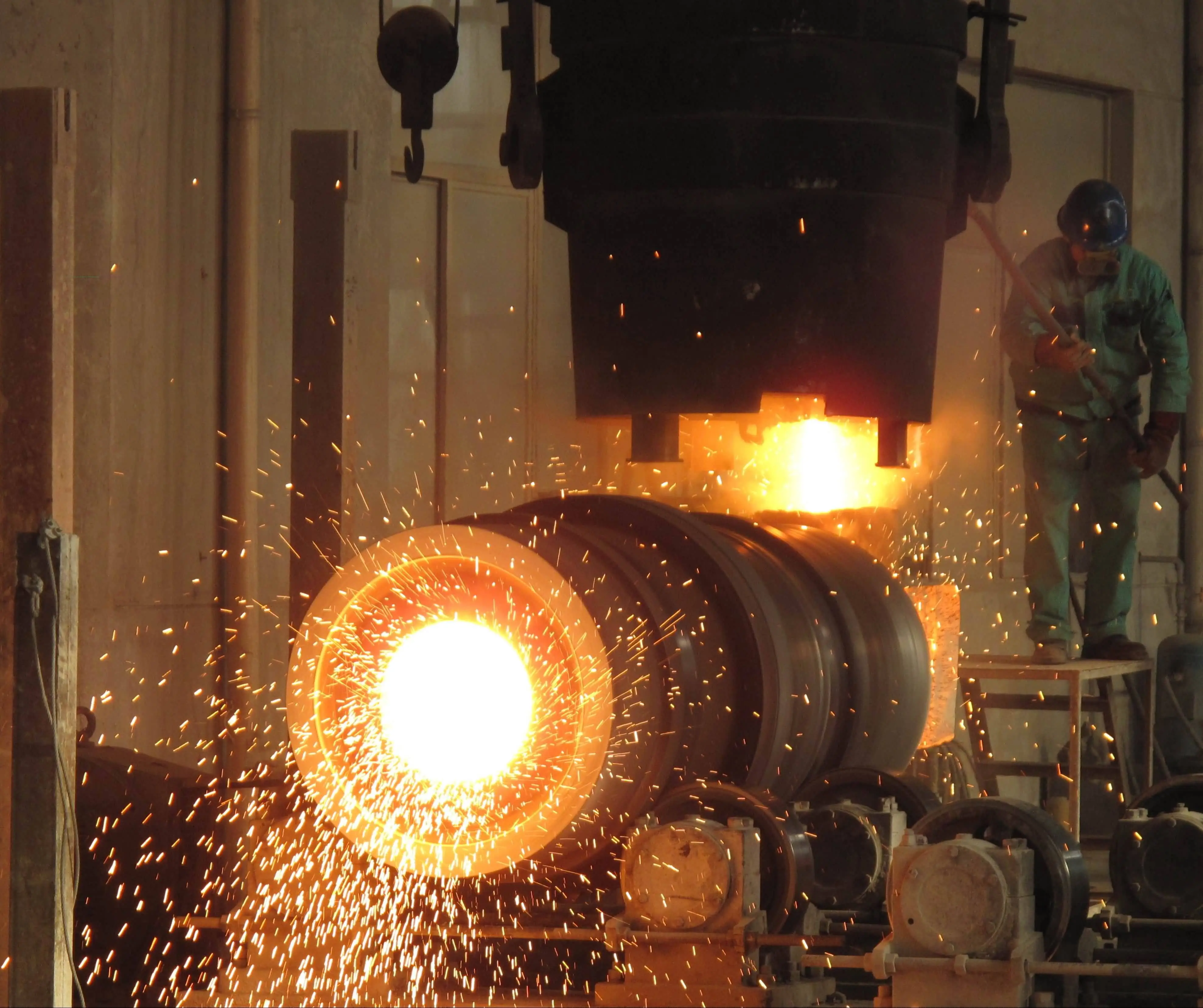
The centrifugal casting method uses centrifugal force to spread liquid metal against the outside wall of a mold that is spinning very quickly. The parts made with this method have thick, uniform microstructures and better mechanical qualities than parts made by static casting. The speed of spinning is usually between 300 and 3000 RPM, but it depends on the size and type of the part. During the casting process, heavy materials move to the outside while smaller impurities move toward the center. This creates a natural cleaning effect. Because of this occurrence, parts become harder on the outside and less likely to rust, which is especially useful for use in tough industrial settings.
Material Options and Applications
Different types of materials can be used for centrifugal casting, such as gray iron, malleable iron, steel alloys, and special metals. Depending on the purpose, each material has its own set of benefits. It is very strong when pulled apart and doesn't break easily when hit, and steel types are very hard and don't wear down easily when used in tough situations. This way of making things is very flexible, so it can be used to make everything from small precision parts to big industrial lines with diameters of several meters or more. Because it can be scaled up or down, centrifugal casting is a great choice for businesses that need to keep quality high across all component sizes.
Advantages of Centrifugal Casting for Large Cylindrical Components
The rotational casting process has many benefits that make it better than other ways of making things. These benefits include better material quality, lower costs, and better performance traits that have a direct effect on how factories work.
Enhanced Material Quality and Structural Integrity
Centrifugal force causes a crushing effect that gets rid of pores and greatly lowers the amount of inclusions. This makes parts with better mechanical properties all the way through the cross-section and a grain structure that is more regular. Impurities move toward the inner surface because of the natural sorting effect. These can be shaved off during finishing operations. The process makes parts that are more resistant to stress and have better physical stability. Studies show that centrifugal cast parts have up to 30% higher tensile strength than parts made with traditional casting methods. In important uses, this improvement means longer service life and fewer maintenance needs to be done.
Cost and Efficiency Benefits
Centrifugal casting is a good choice for large-scale production because of the following benefits:
- Less Material Waste: Compared to cutting from solid billets, this method produces less scrap, with material utilization rates topping 95%.
- Lower Tooling Costs: The original investment and maintenance costs are lower for simple mold designs than for complicated multi-part molds.
- Production cycles that are shorter: the ability to cast continuously lets you get more done while keeping quality standards high.
- Fewer secondary operations: producing in a near-net shape cuts down on the need for cutting and the labor costs that come with it.
These benefits to the economy are especially clear when making big circular parts, where the cost of materials makes up a big part of the total cost of production. Industrial producers can get a lot of value from cutting down on trash and making their processes more efficient.
Comparison with Alternative Pipe Manufacturing Methods
Knowing how the different ways of making things affect their performance helps you make smart decisions about what to buy. Depending on the needs of the product and the conditions of operation, each way has its own benefits.
Welded Pipe Alternatives
Welded pipes are put together using methods that can leave weak spots along the seam lines. Welded construction is good for many uses, but it can cause stress clusters that can hurt performance in high-pressure or cycle loading situations. The heat-affected areas close to welds often have changed metal qualities that can affect how reliable something is in the long run. These worries are taken away by centrifugal casting, which makes parts that fit together perfectly and have the same traits all the way through the structure. Not having any welds takes away possible weak spots and makes quality control easier. This is especially important for important uses where dependability can't be sacrificed.
Seamless Pipe Manufacturing
In the old way of making seamless pipes, they are pierced and rolled, which can add directional grain structures. Even though these methods get rid of weld gaps, they can make features that aren't uniform, which can change how well a part works under certain loads. Centrifugal casting makes truly isotropic parts, meaning they have the same qualities in all directions. This feature is especially useful in situations where there are complicated stress patterns or loads acting in more than one way.
Procurement Insights for Centrifugal Cast Pipes
To successfully buy centrifugal cast parts, you need to know what the key suppliers can do and what the quality standards are. Decisions about strategic sourcing affect both short-term prices and long-term operating success.
Supplier Selection Criteria
Quality approvals are a basic need for companies that supply rotating castings. An ISO 9001:2015 certification shows that you are dedicated to quality management systems, while an industry-specific certification shows that you have specific knowledge. Manufacturers should keep complete testing facilities that can check the material properties and the sizes of products. As part of assessing production skills, equipment capacity, technical knowledge, and engineering support capabilities are all looked at. Suppliers that can do their own design work can give helpful improvement suggestions that raise the performance of parts while lowering their costs.
Ordering Process and Technical Consultation
Early engagement with suppliers during the planning steps is very helpful for the procurement process. Manufacturers with a lot of experience can find ways to improve the process of making something while still meeting performance standards. This method of working together usually leads to lower costs and faster arrival times. There should be precise drawings, material needs, and performance factors in the technical specs. A good project depends on clear communication about tolerance standards, surface finish specifications, and testing methods.
Applications and Case Studies Demonstrating the Benefits
Centrifugal cast parts are used in many industrial settings where dependability and efficiency are important. The usefulness of this manufacturing technology is shown by how it is used in real life.
Oil and Gas Industry Applications
Centrifugal cast parts are used a lot in the oil and gas industry for drilling tools, pipeline systems, and processing plants. For these uses, parts need to be able to handle high pressures, toxic conditions, and changes in temperature. For example, case studies from large drilling projects show that centrifugal cast drilling parts last 40% longer than bonded options. Since fatigue and corrosion protection have been better, upkeep costs have gone down, and operations are more reliable.
Aerospace and Automotive Applications
Centrifugal cast parts are being used more in centrifugal cast pipes and more by aerospace makers for landing gear systems, engine parts, and structural elements. This technology is especially good for uses that need to save weight because it improves mechanical qualities while also reducing weight. In automotive uses, such as gearbox parts, engine blocks, and suspension parts, the performance and longevity are directly affected by the accuracy of the dimensions and the properties of the material.
Conclusion
There are strong reasons to use centrifugal casting technology to make big circular parts for a wide range of industrial uses. This process is especially useful for procurement workers looking for solid, high-performance solutions because it saves money, makes design more flexible, and uses better materials. Because the technology has been used successfully in difficult situations in the past, and because new materials and methods are always being developed, it will continue to be useful for future business needs.
FAQ
1. What materials are suitable for centrifugal casting processes?
Centrifugal casting can be used with gray iron, malleable iron, carbon steel, stainless steel, and special metals, among other materials. The type of material used is determined by the needs of the product, such as the need for strength, resistance to corrosion, and the weather conditions during operation.
2. How do centrifugal cast pipes compare to welded alternatives in terms of durability?
Because they are smooth and made of the same material, centrifugal cast pipes usually last longer than other types of pipes. Since there are no weld lines, there are no possible weak spots. Also, the casting process makes parts that are more resistant to fatigue and have better mechanical qualities.
3. What factors influence pricing and lead times for centrifugal cast components?
Things that go into pricing include the cost of materials, the difficulty of the parts, the size needed, and the number of orders. Lead times depend on when the materials are available, when the production schedule is, and if any extra activities need to be done. When compared to unique designs that need special tools, standard specs usually lead to faster delivery times.
Partner with Welong for Superior Centrifugal Cast Pipes Manufacturing
Welong has been making high-quality centrifugal cast pipes for over 20 years and has a full understanding of the supply chain. These pipes meet the strictest industrial standards. Our ISO 9001:2015-certified facility offers complete solutions, from the initial design advice to the final delivery. This makes sure that the quality is always the same and that your important applications work reliably. Get in touch with our engineering team at metal@welongpost.com to talk about your specific needs and find out how our skills as a centrifugal cast pipes provider can help you improve your buying strategy and lower your risks.
References
1. American Foundry Society. "Centrifugal Casting: Principles and Applications in Modern Manufacturing." Industrial Casting Technology Journal, 2023.
2. International Institute of Foundrymen. "Comparative Analysis of Cylindrical Component Manufacturing Methods." Global Foundry Research Quarterly, 2022.
3. Materials Science and Engineering Institute. "Microstructural Properties of Centrifugal Cast Components: A Comprehensive Study." Advanced Materials Processing Review, 2023.
4. Society of Manufacturing Engineers. "Cost-Benefit Analysis of Centrifugal Casting in Industrial Applications." Manufacturing Economics Today, 2022.
5. Industrial Procurement Association. "Supplier Selection Guidelines for Centrifugal Cast Components." B2B Manufacturing Strategies, 2023.
6. Metallurgical Society International. "Quality Control Standards for Centrifugal Casting Operations." Quality Assurance in Manufacturing, 2022.
Share your inquiry, get the quotation accordingly!
China WELONG- Your Reliable Partner in Metal Solutions