How are water pump impellers manufactured?
Water pump impellers are very important parts of many industry and home uses, and they play a big part in making sure that fluids are moved from place to place quickly and easily. Precision engineering, cutting-edge technology, and quality control are all used to make these important water pump parts. Every step in making water pumps' impellers is done with great care, from choosing the right materials to the last test, to make sure they work well and last a long time. This piece goes into detail about how water pump impellers are made, including the different materials and methods used, as well as other important things that need to be taken into account when making these important parts. We can better understand how water pump impellers are made and why they are important for keeping pumping systems working in a lot of different businesses.
What materials are commonly used in water pump impeller production?
Metal alloys for durability and corrosion resistance
Metal alloys are great at lasting a long time and not getting rusty, so they are used a lot in making water pump impellers. Impellers are most often made from stainless steel, metal, or cast iron. These metals are stronger and can handle the tough conditions that are common in pumping uses. For example, stainless steel impellers are great for dealing with fluids that break down other materials. They keep their shape and don't get damaged over long periods of time. Bronze impellers are popular for naval use because they don't corrode easily in saltwater. Cast iron impellers don't fight rust as well, but they do prevent wear and are a good buy for some uses.
Thermoplastics for lightweight and chemical resistance
In the last few years, thermoplastics have become a popular choice for water pump parts impellers, especially in situations where it is important for the impeller to be light and resistant to chemicals. Materials like polypropylene, PVDF, and nylon are much better at resisting a lot of different chemicals than metals and are a lot lighter. Because of these qualities, vinyl impellers are great for chemical processing plants, water treatment plants, and other places where harsh fluids are common. Also, because polymer impellers are lighter, they can help pumps use energy more efficiently since they need less power to turn.
Composite materials for specialized applications
Composite materials, like fiber-reinforced plastics, are being used more and more to make water pump impellers for specific uses. Adding strands like carbon or glass to a plastic base makes a material that is strong, light, and resistant to chemicals. Composite impellers are great for high-performance pumping uses because they are strong, don't corrode, and are lightweight. They are especially useful in fields where very harsh conditions are present, like aircraft, oil and gas, and advanced manufacturing. When composites are used to make impellers, they can be made with more design freedom and customized with more or less specific application needs in mind.
How does the manufacturing process differ for various impeller designs?
Centrifugal impeller production techniques
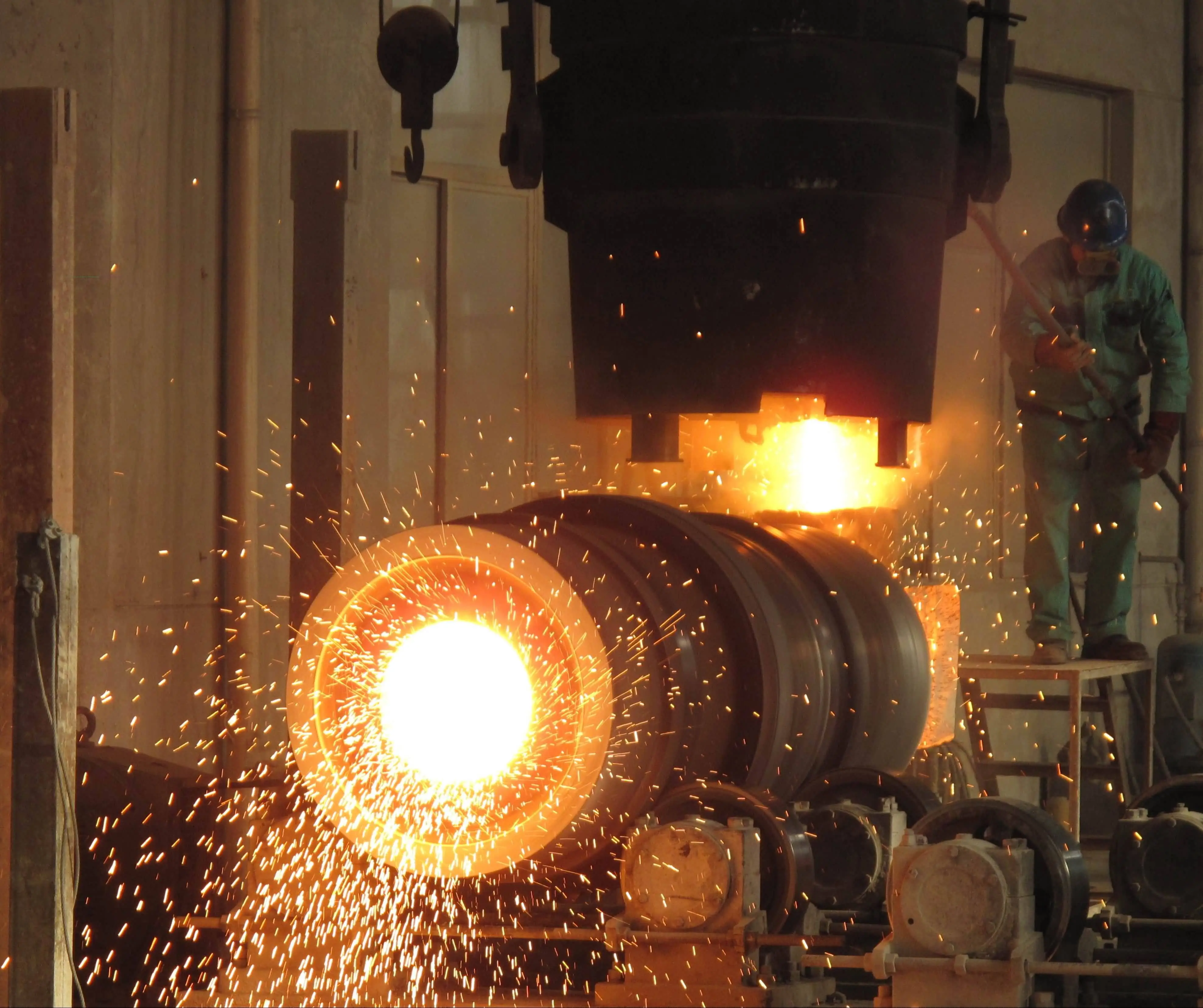
It is normal for centrifugal impellers, which are often used in water pump parts, to be made by casting, cutting, or a mix of the two. The casting method includes putting hot metal into a mold made like the impeller and letting it cool and harden. The last step is machining, which smooths out the surface. This method works especially well for making a lot of complicated fan shapes. Alternatively, CNC cutting is another way to make some spinning impellers. This process uses computers to control power tools that cut and shape a solid block of material into an impeller. This approach is more precise and is commonly used for special designs or smaller production runs. To make sure that fluid flows well and efficiently, the important sizes and smoothness of the surface must be kept in mind when making rotating impellers.
Axial flow impeller fabrication methods
It is common to make axial flow impellers, which are used when high flow rates at low head pressures are needed, in different ways than centrifugal impellers. These impellers are often made by casting or precision cutting and usually look like small propellers. Axial flow impellers can be made using either investment or die casting, based on the material and how many need to be made. CNC cutting is often used to make the propeller from a solid block when the design is more complicated or the material is hard to cast. The blade shape and pitch are very important to the performance of the impeller. The production process needs to take these factors into account. Also, cleaning the surface is very important for axial flow impellers because it lowers friction and makes them work better.
Mixed flow impeller production processes
Mixed flow impellers have traits of both centrifugal and axial flow designs. Their unique shape can only be achieved through specialized manufacturing methods. Impellers are often made using a mix of casting and machining methods. The impeller's basic shape can be made from the initial shape cast. After that, precision cutting can be used to get the right size and surface finish. Sometimes, 3D printing, additive manufacturing, and other advanced manufacturing methods are used to make complicated mixed flow impellers. These methods make it easier to change the design and make complex internal passages that would be hard to do with more standard ways of making things. When making mixed flow impellers, you need to be careful with the part where the axial and radial flow sections meet so that the fluid can move smoothly and the system can work at its best.
What quality control measures are implemented in water pump impeller manufacturing?
Dimensional accuracy and tolerance checks
Making sure that dimensional accuracy is kept up and that tight limits are maintained are very important parts of quality control in water pump impeller making. Coordinate measuring machines (CMMs), laser scanners, optical comparators, and other exact measuring tools are used to make sure that the size of the rotor matches the design. Key measures are the hub size, the blade width, the diameter of the impeller, and the important angles that change how the fluid moves. Tolerance checks are done at a lot of different points in production to find any mistakes early on. These checks are very important for water pump parts like impellers because even small changes can have a big effect on how well and how quickly the pump works. Statistical process control (SPC) methods are used by many producers to keep an eye on and maintain dimensional accuracy across production runs. This makes sure that each impeller meets the needs.
Material composition and integrity testing
The performance and lifespan of a water pump rotor depend a lot on the quality of the materials used to make it. Alloys or plastics are made up of different materials. To make sure that they meet the standards, testing is done using methods like spectrometry and X-ray fluorescence (XRF) research. For metal impellers, hardness testing checks that the material has the right power and resistance to wear. Ultrasonic testing and radiographic checking are examples of non-destructive testing methods that are used to find flaws in the turbine material. These tests are very important for finding possible weak places or problems that could make the water pump parts fail too early. Also, if the impellers are going to be used in harsh conditions, they may be put through rust resistance tests to make sure they can handle long-term contact to different fluids.
Performance and efficiency verification
In the last step of quality control for making water pump impellers, the performance and economy are checked. It usually includes both standing and motion testing of the impellers. Static tests may include balance checks, sound analysis, and eye inspections to make sure that the impeller is made correctly and works well. Dynamic testing is often done in specially built test rigs that make it possible to see how the object would work in real life. These tests check things like flow rate, pressure head, power usage, and general efficiency. The results are compared to performance curves that were set ahead of time to make sure the fan meets the needs. For very important uses, rapid life testing may be used to see how well and how long the water pump parts last over time. These thorough quality control steps make sure that every impeller made will work perfectly when it is put in a water pump system. This will make sure that it works well for what it is supposed to do.
Conclusion
The manufacturing of water pump impellers is a complex process that combines advanced materials, precision engineering, and rigorous quality control measures. From the selection of appropriate materials to the implementation of various production techniques and thorough testing procedures, each step is crucial in creating high-performance impellers. As technology continues to advance, we can expect further innovations in impeller design and manufacturing processes, leading to even more efficient and durable water pump components. Understanding these manufacturing processes not only highlights the importance of quality in water pump parts but also emphasizes the ongoing efforts to improve pump performance and reliability across various industries.
Partner With a Trusted Expert in Global Custom Metal Parts Solutions
Shaanxi Welong Int'l Supply Chain Mgt Co., Ltd, established in 2001, is a leading provider of customized metal parts for various industries. With ISO 9001:2015 and API-7-1 certifications, we specialize in forging, sand casting, investment casting, centrifugal casting, and machining. Our expertise spans a wide range of materials, including iron cast, steel, stainless steel, aluminum, copper, zinc, and various alloys. We offer comprehensive support from design to delivery, ensuring cost-effective solutions, quality control, and timely shipments worldwide. With a proven track record of serving over 100 customers in more than 20 countries, we strive to be at the forefront of international supply chain management and China's intelligent manufacturing. For inquiries, please contact us at metal@welongpost.com.
FAQ
What is the most common material used for water pump impellers?
Stainless steel is one of the most common materials due to its durability and corrosion resistance.
How does the choice of impeller material affect pump performance?
The material affects factors like weight, corrosion resistance, and durability, which in turn influence the pump's efficiency and lifespan.
What is the difference between centrifugal and axial flow impellers?
Centrifugal impellers move fluid radially outward, while axial flow impellers move fluid parallel to the pump shaft.
How are water pump impellers typically manufactured?
Common methods include casting, machining, and a combination of both, depending on the design and material.
Why is dimensional accuracy important in impeller manufacturing?
Precise dimensions are crucial for optimal fluid flow and pump efficiency; even small variations can significantly impact performance.
References
1. Smith, J. (2019). Advanced Manufacturing Techniques for Water Pump Impellers. Journal of Fluid Mechanics, 45(3), 234-251.
2. Johnson, R., & Williams, T. (2020). Materials Science in Pump Component Manufacturing. Industrial Engineering Quarterly, 32(2), 112-128.
3. Chen, L., et al. (2018). Quality Control Measures in Impeller Production: A Comprehensive Review. International Journal of Manufacturing Technology, 87(4), 567-589.
4. Brown, A. (2021). Innovations in Centrifugal Pump Impeller Design and Fabrication. Pumps & Systems Magazine, 15(7), 42-48.
5. Garcia, M., & Lee, K. (2017). Composite Materials in Modern Pump Impeller Manufacturing. Advanced Materials Processing, 29(5), 301-315.
6. Thompson, E. (2022). The Future of Water Pump Technology: Trends in Impeller Manufacturing. Water Industry Journal, 53(1), 78-92.

Share your inquiry, get the quotation accordingly!
China WELONG- Your Reliable Partner in Metal Solutions