Heavy-duty ductile iron castings are used as key parts in many industries, such as the transportation industry, the building industry, and oil and gas drilling. Advanced casting technologies that allow for precise control of dimensions and better mechanical qualities are very important to the success of these important parts. Resin sand full mold casting has changed the way complex ductile iron parts are made by giving them great strength, perfect permeability, and controlled collapse. This new way of shaping meets the growing need for high-precision casting solutions while still being cost-effective in factories that make a lot of things.
Understanding Resin Sand and Its Role in Full Mold Casting
Composition and Properties of Resin Sand Systems
To make better casting materials, modern foundries use carefully made sand mixes that contain both high-quality silica sand and synthetic resin bonds. With bond strengths between 3.5 and 5.5 MPa, these hybrid systems are much stronger than standard green sand options. The phenolic or furan-based binders make chemical bonds that keep the mold intact during high-temperature metal pours and make sure that the parts separate cleanly during knockout operations.
Advantages Over Traditional Molding Materials
When compared to regular casting sands, the synthetic binding technology gives clear performance advantages. Engineers always see better measurement accuracy within ±0.5mm limits and better surface finish quality, with Ra values below 12.5 micrometers, when they compare different casting materials. Controlled gas evolution during metal solidification reduces porosity flaws while keeping permeability rates between 150 and 250 cm³/min.
Step-by-Step Resin Sand Full Mold Casting Process for Ductile Iron
Sand Preparation and Mixing Operations
For casting to go well, the sand must be precisely prepared using automatic mixing equipment that makes sure the glue is spread out evenly. The sand-to-binder ratio in modern foundries is usually between 1.2% and 1.8% by weight, but this can change based on the casting needs and complexity. Temperature control during mixing stops hardening before it's time, and the best working times are between 45 and 60 minutes.
Mold Formation and Quality Control
Specialized pushing methods are used to make sure that the density is spread evenly throughout the mold space during the mold-making process. Some quality control checks are testing for leakage, making sure the wetness content is less than 0.3%, and checking the compression strength. Modern foundries use automatic screening systems that keep an eye on mold quality factors in real time. This makes sure that production standards are always met.
Metal Pouring and Thermal Management
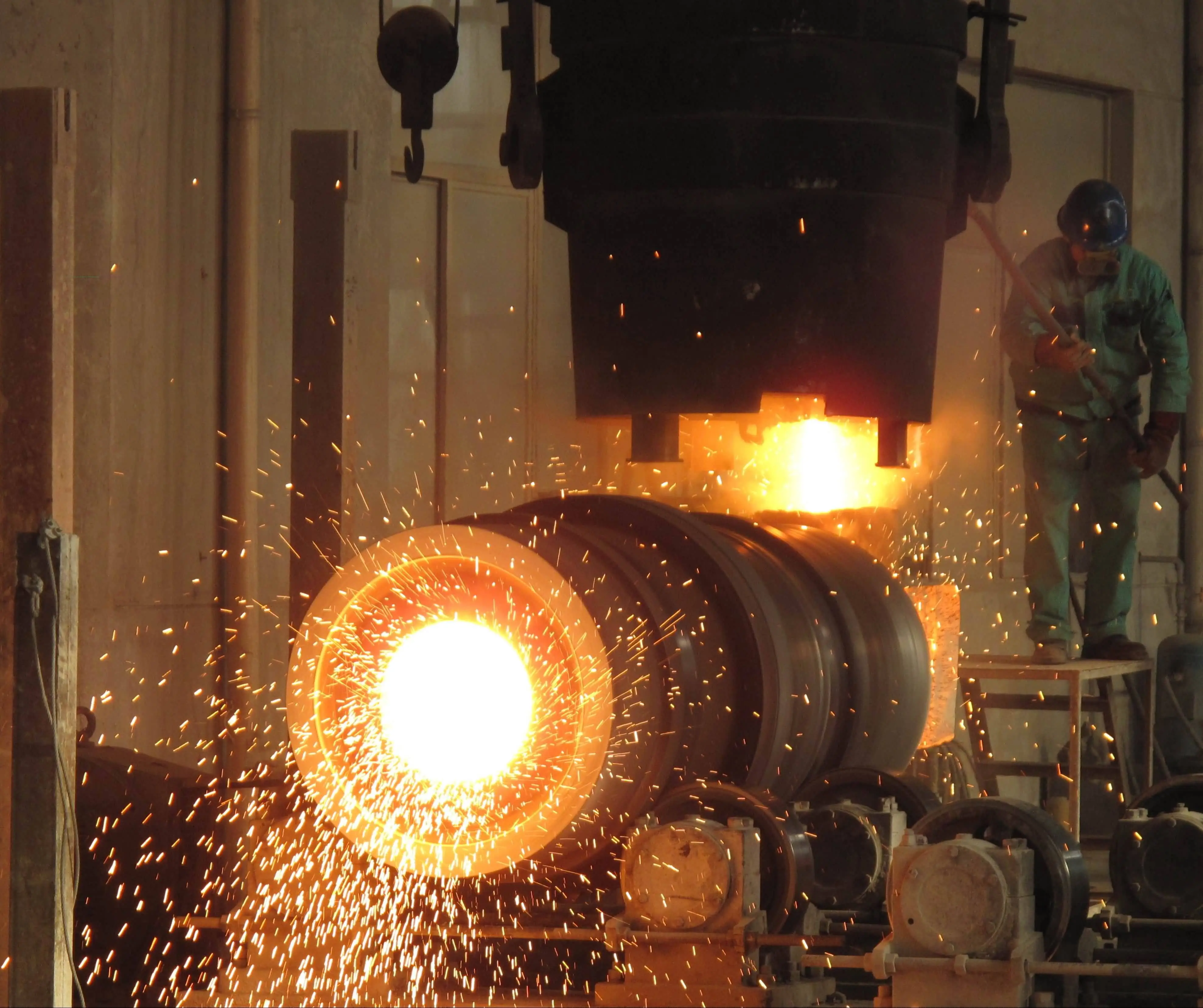
To get the right irregular graphite formation during ductile iron pouring, the temperature must be carefully kept between 1380°C and 1420°C. Resin sand, because synthetic binding systems are more thermally stable, makes the mold not break down during long pouring processes. The mold's temperature qualities make it possible to control the rate of cooling, which leads to the best nanoscale development and mechanical property success.
Benefits and Industry Applications of Resin Sand Full Mold Casting
Performance Advantages in Heavy-Duty Applications
Using modern casting technologies in manufacturing makes a huge difference in the quality of the parts and the speed of production. Because the dimensions are more stable, cutting gaps are cut by 30–40% compared to old ways of doing things. This saves a lot of money on materials. Improvements in surface quality get rid of the need for extra finishing steps in many situations, especially when it comes to parts for cars and airplanes.
Key operational benefits include:
- Dimensional accuracy within ±0.5mm tolerances across complex geometries, meeting stringent aerospace and automotive specifications
- Superior surface finish quality, achieving Ra values below 12.5 micrometers, reducing post-casting machining requirements
- Enhanced fatigue resistance through improved microstructure control, extending component service life by 25-30%
- Reduced scrap rates below 3% through consistent mold quality and controlled gas evolution during solidification
These performance improvements directly address the quality demands of industries requiring precision-engineered components with exceptional durability characteristics.
Environmental and Economic Considerations
Modern foundries put ecology and production efficiency at the top of their lists of priorities. This makes synthetic binder systems especially appealing to makers who care about the environment. Because these shaping materials can be reused, sand reuse rates are higher than 85%, which cuts down on trash dumping costs and the damage to the environment. Lowering the amount of volatile organic compound fumes that are released during casting operations makes the workplace safer and helps meet stricter environmental rules.
Comparative Evaluation: Resin Sand Against Other Molding Sand Solutions
Performance Comparison with Traditional Materials
Procurement managers have to look at a lot of performance factors that affect both quality and cost-effectiveness when they compare different shaping technologies. When it comes to important factors like binding strength, physical stability, and environmental effect, synthetic binder systems work better than sodium silicate, furan, and standard clay-bonded sands.
Selection Criteria for Optimal Results
What kind of shaping material to use relies on the job, the amount of work that needs to be done, and the quality standards. Resin sand is used in various foundry applications. Phenolic-based systems have short fix times and good physical control, which makes them great for high-volume car uses. For aerospace uses that need to be very precise, furan-based formulas work best because they give a better surface finish and release less gas during casting.
Procurement Insights and Guidelines for Resin Sand Supplies
Supplier Evaluation and Selection
To strategically source high-quality molding materials, you need to carefully evaluate each seller, paying special attention to their technical skills, quality certifications, and the dependability of their supply chain. The best providers keep their ISO 9001:2015 certification up to date and give full details about the materials they sell, such as the binder chemistry, working time traits, and suggested processing parameters. Technical support services, such as on-site improvement help and the ability to fix problems, make the provider relationship much more valuable.
Cost Optimization Strategies
Good buying strategies combine the original costs of materials with all the costs of running the business, such as storage, shipping, and expert support. By buying in bulk, you can usually save 8–12% on costs while still making sure that the quality and quantity of the materials stay the same. Long-term partnerships with skilled providers make it possible for both parties to work together to create unique solutions that are perfect for certain casting needs.
Welong's Commitment to Advanced Casting Solutions
Technical Expertise and Quality Assurance
Welong has been a top provider of specialized casting solutions since 2001. They have over 100 users in the automobile, aircraft, and industrial production sectors. Our ISO 9001:2015-certified operations make sure that we always offer high-quality work, and our engineering team uses AutoCAD, Pro-Engineering, and SolidWorks to help with all aspects of design optimization.
Global Supply Chain Management
Our knowledge of the foreign supply chain lets us reliably find and send high-quality molding materials, including resin sand, to buyers in North America, Europe, and the Asia-Pacific area. We make unique metal parts from sketches and samples provided by our customers, and we offer full engineering help throughout the whole development process. This all-around method guarantees the best casting results while keeping costs low and delivery on time.
Conclusion
Molding technologies have improved over time, making synthetic binder systems like resin sand the best choice for tough ductile iron casting jobs. These materials are necessary for modern foundries because they offer better measurement accuracy, better surface quality, and better environmental performance. Adopting advanced molding technologies strategically is becoming more and more important for staying ahead in global markets as industry needs keep changing toward higher accuracy and greater sustainability.
FAQ
Q1: What types of resin binders are commonly used in molding sand for ductile iron castings?
A: The most common binder types include phenolic-urethane systems for high-volume production and furan-based formulations for precision applications. Phenolic binders offer fast cure times and excellent dimensional stability, while furan systems provide superior surface finish quality and lower gas evolution rates.
Q2: How does synthetic binder technology improve casting quality compared to green sand?
A: Synthetic binder systems deliver superior dimensional accuracy within ±0.5mm tolerances and enhanced surface finish quality, achieving Ra values below 12.5 micrometers. The controlled gas evolution minimizes porosity defects while maintaining optimal permeability, resulting in scrap rate reductions below 3%.
Q3: What factors influence the pricing of premium molding materials in the market?
A: Material costs depend on binder chemistry complexity, quality specifications, order volumes, and technical support requirements. Premium formulations with specialized additives command higher prices but often provide better overall value through improved casting quality and reduced processing costs.
Partner with Welong for Superior Casting Solutions
Welong brings over two decades of foundry expertise to your heavy-duty ductile iron casting projects. Our comprehensive supply chain management capabilities ensure reliable access to premium molding materials, while our engineering team provides optimization support throughout the development process. As a trusted resin sand supplier, we deliver customized solutions that meet the demanding requirements of automotive, aerospace, and industrial manufacturing applications. Experience the advantages of working with a proven partner committed to quality excellence and technical innovation. Contact us at metal@welongpost.com to discuss your specific casting requirements and discover how our advanced foundry solutions can enhance your manufacturing operations.
References
1. Campbell, J. (2015). Complete Casting Handbook: Metal Casting Processes, Metallurgy, Techniques and Design. Second Edition, Butterworth-Heinemann.
2. Brown, J.R. (2014). Foseco Foundryman's Handbook: Facts, Figures and Formulae. Eleventh Edition, Elsevier Science & Technology.
3. Stefanescu, D.M. (2017). Science and Engineering of Casting Solidification. Third Edition, Springer International Publishing.
4. Beeley, P.R. (2001). Foundry Technology. Second Edition, Butterworth-Heinemann Engineering.
5. ASM International. (2018). Casting: ASM Handbook Volume 15. Materials Park, Ohio: ASM International.
6. Heine, R.W., Loper, C.R., and Rosenthal, P.C. (2013). Principles of Metal Casting. Third Edition, McGraw-Hill Education.