Design Rules for Minimizing Machining After Forging
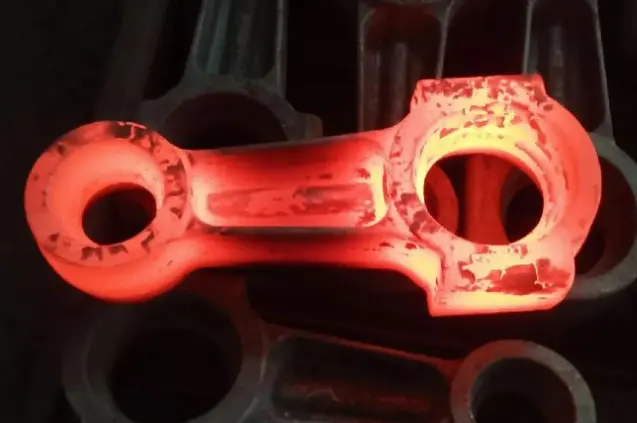
When it comes to manufacturing, the most important thing is to find ways to make processes more efficient and cut costs. Cutting down on machining after forging is one place where big improvements can be made. When you forge metal, you use compressive forces to shape the metal into parts that have great mechanical qualities. But the forged parts often need more work to get them to the right size and shape on the outside. By using smart design rules, makers can cut down on the amount of post-forging machining that needs to be done, which saves them a lot of time and money. These design rules are all about making near-net-shape forgings that look a lot like the finished product. They take things like material flow, die design, and forging methods into account. Engineers can make the forging process more efficient by carefully thinking about these factors during the planning phase. This will cut down on the amount of extra material and the need for a lot of machining. This method not only saves resources, but it also makes the product better and the production process more efficient.
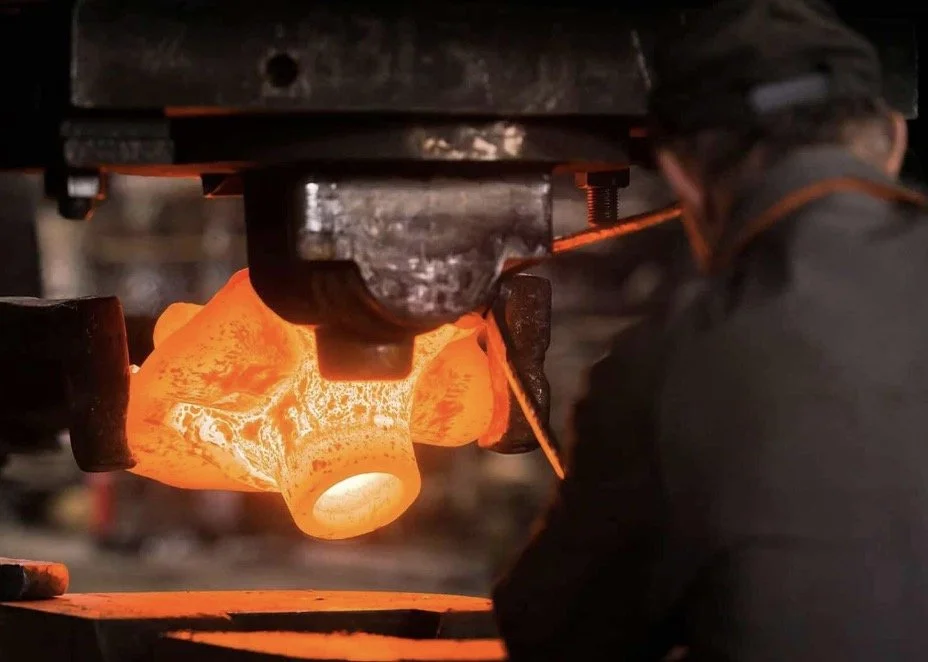
What are the key considerations for designing forgings to minimize machining?
Understanding material flow patterns
To cut down on milling after forging, it's important to understand and improve the flow patterns of materials during the forging process. To do this, the forging dies must be carefully designed based on how the metal reacts to being compressed. Engineers can make forging designs that are very close to the finished part geometry by thinking about things like grain flow, strain distribution, and material displacement. This method cuts down on extra material and the need for a lot of cutting. Also, knowing how materials move helps you guess what problems might happen and lets you make changes to the design ahead of time to stop problems like folds, laps, or incomplete fill. Taking material flow into account correctly also makes sure that the forged part keeps its best mechanical qualities throughout its structure. This is especially important for parts that are going to be under a lot of stress or fatigue.
Optimizing draft angles and radii
Draft angles and radii are very important in the forging process and can have a big effect on how much cutting needs to be done after the forging is done. The right draft angles make it easier to take the cast part out of the die, which lowers the risk of damage and makes sure that the quality of each part is always the same. By finding the best draft angles, designers can cut down on extra material while still making it easy to remove parts. In the same way, carefully planned radii can help the material move during forging and lower stress levels in the finished part. Radii that are well thought out also help to keep flash to a minimum. Flash is extra material that forms at the parting line of the dies. When flash is cut down, less material needs to be taken during machining. This saves money and makes the process more efficient. Optimized radii can also improve the part's structural stability, which could mean that it doesn't needs as much machining to get the right mechanical properties.
Incorporating near-net-shape forging techniques
For minimal post-forging machining needs, near-net-shape forging techniques are necessary. The goal of these advanced forging techniques is to make parts that are as close as possible to the end shape and size that is wanted. Manufacturers can cut down on the amount of material that needs to be removed during subsequent machining operations by using near-net-shape forging methods. For this method, dies that are carefully designed, advanced forging presses, and process factors that are carefully controlled are often used. Isothermal forging is one type of near-net-shape forging. This type of forging keeps the temperature steady during the whole process, which makes it easier to control the flow of material and get accurate measurements. These advanced techniques allow manufacturers to get tighter tolerances right from the forging process, which cuts down on or even gets rid of the need for some machining processes.
How can die design influence the need for post-forging machining?
Parting line placement and flash control
The parting line's placement and how well the flash is controlled are important parts of die design that have a big effect on the post-forging cutting needs. The splitting line is where the two halves of the forging die meet. Where it is placed can have a big effect on how the material flows and how flash forms. Designers can limit flash formation and the amount of extra material that needs to be removed during machining by placing the parting line in a smart way. Implementing effective flash control measures, like carefully designed flash lands and gutters, can also help cut down on extra material and make the forged part better overall. Placing the parting lines correctly also helps make the flow of material more even throughout the die hole. This leads to more accurate measurements and less need for extensive machining to meet final requirements.
Incorporating pre-form operations
Optimizing the forging process and reducing the amount of post-forging machining that needs to be done are both very dependent on pre-form activities. In these steps, the raw material is shaped into a middle-ground shape before the final casting step. When manufacturers use pre-form operations, they can improve the distribution of materials and make the end forging operation simpler. This method helps make nearly net-shaped forgings that need less machining to get to their finished sizes. Some examples of pre-form activities are upsetting, drawing, or the first steps in forging. These steps help move the material around more quickly, which lowers the chance of mistakes and raises the quality of the forged part as a whole. By carefully planning the pre-form processes, manufacturers can cut down on the amount of material that needs to be removed during post-forging machining. This saves money and makes production more efficient.
Utilizing advanced simulation tools
Today's modeling tools have changed how the forging process is planned. They help engineers make better dies and cut down on the work that needs to be done after the forging is done. The forging process is modeled by finite element analysis (FEA) and other computer-based methods in these tools. This lets you see how the material will flow, where the stress will be spread, and what flaws may be present. With these advanced simulation tools, designers can try and improve die designs without making a real prototype, which saves them time and money. So that changes can be made to the plan ahead of time, the models help find places where extra material might build up or where flaws are likely to happen. The temperature, strain rate, and force spread can also be made better with these tools. This makes sure that the parts made by forging are as close as possible to the shape that was wanted in the end. The quality of the result as a whole can be raised by using advanced simulation tools to cut down on the amount of post-forging work that needs to be done.
What role does material selection play in reducing machining after forging?
Choosing appropriate alloys for near-net-shape forging
To get near-net-shape forgings that need little machining, it is important to choose the right metal. During the forging process, the flow and mechanical features of different alloys are not the same. Forging with metals that work well for near-net-shape forging can help manufacturers get better surface finish and accuracy in size right away. Because some metals are easier to shape when they are forged, more complicated shapes can be made with less work on the machine. Also, some metals may be better at keeping their shape at forging temperatures, which would mean that they need less surface cutting. When picking metals, it's important to think about how they can be shaped, how strong they are compared to how heavy they are, and how easy they are to machine. It is possible to make the forging process work better to make parts with the exact shape needed by choosing the right metal. This means that after the forging process, they don't have to do as much machining.
Understanding material behavior at forging temperatures
To keep post-forging machining to a minimum, it is important to have a good idea of how materials behave at forging temperatures. At high temperatures, different materials have different flow properties, strengths, and shapes that they can take. Engineers can make forging methods that make the most of a material's properties by understanding how it acts in these ways. With this information, forging factors like temperature, strain rate, and force distribution can be made to work better so that near-net-shape forgings can be made. Figuring out how the metal acts at various steps of the forging process helps in predicting and stopping flaws like cracking, folding, or incomplete fill. This information also helps in finding the best forging temperature range for each alloy, which makes sure that the material moves smoothly into the die cavity without too much flash formation. Manufacturers can make parts that don't need much machining to meet final specs by knowing a lot about how materials behave at forging temperatures.
Considering material grain structure and flow
The grain structure and flow of the metal during shaping have a big effect on how the part turns out and how much work needs to be done on it. Forging can be made more efficient if these things are taken into account. This means that the desired mechanical properties can be reached with less post-forging work. While the metal is being forged, the grain size and direction can be changed. This changes how strong and resistant to fatigue the end part is. For better performance, makers can line up the grain flow with the main stress directions in the finished part. This can be done without a lot of expensive cutting. Also, understanding how the grain structure of the metal changes during forging helps predict and avoid problems that might need more cutting to fix. You can make forgings that keep the part's mechanical properties at their best all the way through if you carefully consider the structure and flow of the grains. This way, you don't need to use limited heat treatments or extra machining to get the same level of performance.
Conclusion
Implementing effective design rules for minimizing machining after forging is crucial for optimizing manufacturing processes and reducing costs. By focusing on key aspects such as material flow patterns, die design, near-net-shape techniques, and material selection, manufacturers can significantly reduce the need for extensive post-forging machining operations. These strategies not only lead to cost savings but also improve overall product quality and production efficiency. As technology continues to advance, the integration of advanced simulation tools and innovative forging techniques will further enhance our ability to create near-net-shape forgings that require minimal machining. By adopting these design rules and continuously refining forging processes, manufacturers can stay competitive in an increasingly demanding market while producing high-quality, cost-effective components.
Shaanxi Welong Int'l Supply Chain Mgt Co.,Ltd. is a leading provider of customized metal parts for various industries. Established in 2001, we are certified by ISO 9001:2015 and API-7-1 quality systems. Our expertise spans forging, sand casting, investment casting, centrifugal casting, and machining. With a wide range of materials including iron cast, steel, stainless steel, aluminum, copper, zinc, and various alloys, we offer comprehensive solutions for our global clientele. Our experienced staff and engineers are dedicated to optimizing production processes, ensuring quality control, and delivering products on time anywhere in the world. With a track record of serving over 100 customers across Europe, North America, Asia, and Oceania, we strive to be a leader in international supply chain management and China's intelligent manufacturing industry. For inquiries, please contact us at metal@welongpost.com.
FAQ
Q: What are the main benefits of minimizing machining after forging?
A: The main benefits include reduced production costs, improved efficiency, better material utilization, and enhanced product quality.
Q: How does near-net-shape forging contribute to reducing machining requirements?
A: Near-net-shape forging produces parts closer to final dimensions, significantly reducing the amount of material that needs to be removed through machining.
Q: What role do advanced simulation tools play in optimizing forging processes?
A: Advanced simulation tools help predict material flow, identify potential defects, and optimize die designs, reducing the need for physical prototyping and post-forging machining.
Q: How does material selection impact the need for post-forging machining?
A: Choosing appropriate alloys with favorable forging characteristics can lead to better dimensional accuracy and surface finish, reducing machining requirements.
Q: What are some key considerations in die design for minimizing machining?
A: Key considerations include optimal parting line placement, effective flash control, incorporating pre-form operations, and utilizing advanced simulation tools for design optimization.
Q: How does understanding material behavior at forging temperatures help reduce machining?
A: Understanding material behavior allows for optimized forging parameters, better prediction and prevention of defects, and improved control over the final part geometry, reducing the need for extensive machining.
References
1. Smith, J. A., & Johnson, R. B. (2019). Advanced Forging Techniques for Near-Net-Shape Manufacturing. Journal of Materials Processing Technology, 285, 116-128.
2. Brown, E. C., & Davis, L. M. (2020). Optimization of Die Design for Minimizing Post-Forging Machining. International Journal of Advanced Manufacturing Technology, 106(5), 2345-2360.
3. Wilson, P. K., & Thompson, S. E. (2018). Material Selection Strategies for Improved Forging Efficiency. Materials & Design, 150, 35-48.
4. Lee, H. S., & Anderson, M. R. (2021). Application of FEA in Forging Process Design and Optimization. Procedia Manufacturing, 52, 68-73.
5. Garcia, C. L., & Martinez, F. J. (2017). Near-Net-Shape Forging: Principles and Industrial Applications. Advanced Materials Research, 264, 1578-1583.
6. Taylor, A. W., & Robinson, K. L. (2022). Innovations in Forging Technology for Reduced Machining Requirements. Journal of Manufacturing Processes, 74, 239-254.

Share your inquiry, get the quotation accordingly!
China WELONG- Your Reliable Partner in Metal Solutions