Can a Custom Heatsink Reduce Overheating in Electronics?
A well-designed custom cooler can reduce the risk of warming in industrial, automobile, aircraft, and medical electronics by a large amount. A heatsink takes heat away from a hot part and lets it escape into the air around it. This keeps gadgets safe within a safe temperature range. Standard parts don't usually work with tough casings or loads that are too heavy. This guide shows how a custom heatsink is made, what materials are most important, and what kinds of overheating issues it can fix in real life.
What Is a Custom Heatsink and Why Does It Matter for Electronics?
The Core Function of a Heatsink
A well-designed custom cooler can reduce the risk of warming in industrial, automobile, aircraft, and medical electronics by a large amount. A heatsink takes heat away from a hot part and lets it escape into the air around it. This keeps gadgets safe within a safe temperature range. Standard parts don't usually work with tough casings or loads that are too heavy. This guide shows how a custom heatsink is made, what materials are most important, and what kinds of overheating issues it can fix in real life.
How a Heatsink Works at Its Core
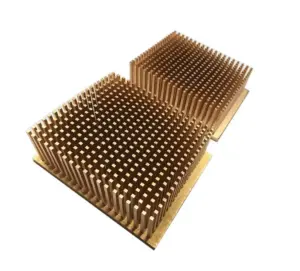
A heatsink is a thermal management part that spreads heat across fins on a chip, power module, or drive electronics so that air can carry it away. Whenever an electric device works, it gives off waste heat. If there isn't a vent to let heat escape, temperatures inside the component rise until it stops working or breaks completely.
Why Standard Parts Often Fall Short
Heatsinks from a catalogue work with most consumer electronics, but they don't always fit oilfield tools, aerospace avionics, or automotive inverters. A custom cooler is made to fit the exact power load, container size, and fitting shape of the application. This fills in the performance gaps that standard thermal parts always leave behind in tough settings.
Temperature and Long-Term Reliability
A lot of reliability engineers use the "10°C rule," which says that every 10°C rise in temperature can cut part life in half. A heatsink of the right size keeps junction temperatures well below the levels at which they can fail. This keeps semiconductors, capacitors, and connectors safe from the faster wear that heat always causes in industrial equipment after years of use.
Key Design Factors That Influence Heatsink Cooling Efficiency
Fin Geometry and Surface Area
How much surface area a heatsink gives moving air depends on how high, how far apart, and how thick its fins are. Taller, thinner fins make more contact, but if they are packed too closely together, they can trap air that isn't moving. Engineers weigh this trade-off against the type of airflow, since a fan designed for natural convection is different from one designed for forced air.
Thermal Resistance and Power Load
Thermal resistance is the amount that a part's temperature rises above room temperature for every watt that it consumes. When the power load stays the same, a heatsink with less resistance moves heat away more quickly. Engineers can be sure of the maximum power a device can safely handle inside its final building design by figuring this number out early on.
Ambient Environment and Enclosure Placement
Where a fan is placed and what is around it inside a box affect how well it works. Even if the fins are well designed, they won't cool as well if wires or other nearby parts block the airflow. It is not just the heatsink that needs to be looked at; the whole wind path and temperature range in the area should also be looked at.
How Material Selection Affects Heat Dissipation and Device Safety
Aluminum for Weight-Sensitive Applications
Aluminium alloys have a low density of about 2.7 g/cm³ and a heat conductivity of 160 to 220 W/m·K, based on the grade of the alloy. Because of this, aluminium heatsinks are great for electronics in aircraft, cars, and movable devices that need to be light, since lowering mass is just as important as keeping heat under control over long periods of time.
Copper for Concentrated Heat Loads
Copper moves heat around more quickly than aluminium, but it costs a lot more per kilogram and weighs almost three times as much. Copper heatsinks are very expensive, but they're worth it in places with small, high-power-density hot spots because they spread heat quickly, which stops high-performance power electronics from overheating in places where concentrated heat would quickly damage nearby parts.
Surface Treatments and Corrosion Protection
It's not enough for anodising to just keep an aluminium fan from rusting. The process raises the surface emissivity, which makes radiation cooling work better in small areas where movement is limited. Nickel plating and other similar treatments make heatsinks last longer, which is very important for long-term use in wet, remote, or corrosive industrial settings.
Common Overheating Issues Solved by Custom Heatsinks
Hotspot Formation in Compact Enclosures
Dense barriers keep heat in places where wind barely gets to important parts. This problem can be fixed with a custom cooler that shapes the fan designs around the heat source instead of putting them in the middle of the box. These hotspots are found by thermal modelling before production, which means they are found long before a prototype even gets to a test bench.
Thermal Shutdowns Under Peak Load
During times of high load, power electronics in drives and transformers focus heat at the joints of semiconductors. A cooler of the right size spreads that heat equally over a larger area before it hits the air outside. This stops thermal runaway, which is what causes unexpected shutdowns and poor performance in the world's most demanding industrial power systems.
Vibration and Cycling in Field Equipment
Field equipment is always shaking, and the temperature changes quickly between storage and use. If you have a custom heatsink built with vibration-rated mounts and thermal cycling in mind, the fins won't crack or wear out as quickly as they do on off-the-shelf heatsinks when they are put through these repeated mechanical and thermal stresses in the field.
Conclusion
A custom heatsink can fix problems with overheating that standard parts can't, especially in medical, aerospace, industrial, and automotive settings. The choice of material, the design of the fins, and thermal testing all affect how well a device works for years. Welong was established in 2001 and is ISO 9001:2015 approved. They can make custom heatsinks from your plans or samples and have 20 years of experience in the global supply chain. Work with Welong to manage heat for a long time.
FAQ
1. What is the difference between aluminium and copper heatsinks?
Aluminium offers good conductivity at low weight and cost, while copper conducts heat faster but weighs more, making it ideal for small, high-power-density hot spots.
2. How do I know if I need a custom heatsink instead of a standard one?
If power load, enclosure space, or environmental conditions fall outside catalogue specifications, a custom heatsink becomes necessary to reach your target temperature reliably.
3. Can a heatsink alone prevent all overheating?
A heatsink handles conduction and convection, but severe power densities sometimes require pairing it with active cooling or heat pipes.
4. How long does custom heatsink development take?
Engineering review typically starts within days of receiving drawings, while prototyping and validation for full production generally take several weeks, depending on complexity.
5. What certifications should a heatsink supplier hold?
ISO 9001:2015 certification indicates a documented quality system, which matters considerably when sourcing custom metal thermal parts from international manufacturers.
Request a Custom Heatsink Feasibility Review
Overheating problems cost more the longer they go unaddressed, from field downtime to damaged customer trust. Welong's engineering team reviews your drawings or samples using AutoCAD, Pro-Engineering, and Solidworks, backed by ISO 9001:2015 certified processes and 20 years of shipping industrial parts worldwide. As a trusted heatsink manufacturer, Welong turns your specifications into validated production parts. Email metal@welongpost.com to start your review today.
References
1. Electronics Cooling Journal, "Does a 10°C Increase in Temperature Really Reduce the Life of Electronics by Half?" (2026)
2. IEEE Transactions on Components, Packaging and Manufacturing Technology, "Advances in Heat Sink Design for Power Electronics" (2023)
3. ASM International, "Properties and Selection of Aluminum and Copper Alloys for Thermal Applications" (Handbook Reference)
4. Journal of Electronic Packaging, "Thermal Resistance and Fin Optimisation in Forced Convection Heat Sinks" (2022)
5. International Organisation for Standardisation, "ISO 9001:2015 Quality Management Systems Requirements" (2015)
6. SAE International, "Thermal Management Practices for Automotive and Aerospace Power Electronics" (2024)

Share your inquiry, get the quotation accordingly!
China WELONG- Your Reliable Partner in Metal Solutions